Your Cycle, Training and Menopause
Your body runs on a rhythm — and it changes over the years. What that means for your training, your eating and how you feel, how to recognise the menopause transition, and why strength training matters so much right now.
Your body runs on a rhythm. Plenty of women barely notice it day to day, some feel it strongly — and over the years it changes. This lesson covers what that rhythm means for your training, your eating and how you feel, how to recognise the menopause transition, and when it's worth checking your iron.
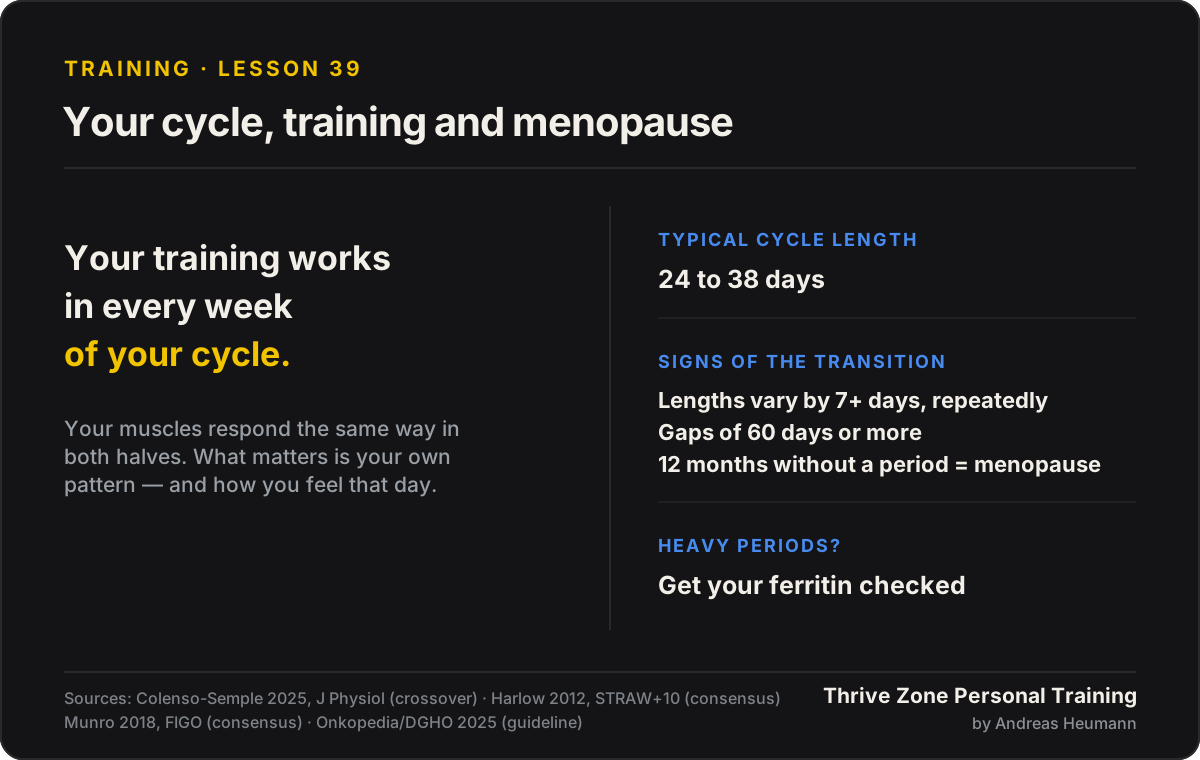
Your training works in every week of your cycle. What matters is your own pattern — and the years around menopause are exactly when strength training matters most for your bones and muscles.
1. Your cycle, in plain terms
A cycle runs from the first day of your period to the day before the next one. In the first half an egg matures, ovulation happens somewhere around the middle, and in the second half your body prepares for a possible pregnancy. Along the way, oestrogen and progesterone rise and fall in a regular pattern.
The classic 28 days is just one of many normal lengths. Anything from 24 to 38 days is typical, and even in the same woman the length varies by a few days from month to month. Your cycle is as individual as your training.
2. Strength and muscle across the month
Good news first: as far as the research shows, your muscles respond to training the same way in both halves of the cycle. They build new muscle protein just as well in the first half as in the second. Your strength stays largely steady across the month, too. How much you notice your cycle varies from woman to woman — which is why experts recommend looking at each person individually.
So your training plan works in every week. What counts is how your body feels on the day. If you feel flat or your symptoms are bad, turn the intensity down and train anyway — lighter, shorter, with longer rests. That keeps your rhythm going and gives your body exactly what it can handle well that day.
The same applies if you're on the pill: you build muscle just as well.
3. Training during your period
Training on your period days is completely fine. In fact, regular exercise can ease period pain — this has been looked at most closely for cardio, stretching and yoga, a few times a week over several weeks.
Go by how you feel. On a day with bad cramps, a relaxed walk, some mobility work or a light circuit is plenty. On a good day, train as usual.
4. What elite athletes track — and why
In elite sport, experts recommend logging your cycle — mainly as a way to look after your wellbeing: if you know your cycle, you spot symptoms earlier, find it easier to talk about them, and notice when something changes — for example, when you miss a period. That's exactly the idea behind the cycle feature in the ThriveZone app.
5. Eating across your cycle
In the days before a period, many women feel hungrier and crave sweets, chocolate or something salty. That's normal biology. It fits with the fact that resting metabolic rate rises slightly in the second half of the cycle for many women. On those days, let your hunger guide you — regular meals with plenty of protein and vegetables keep you full and steady.
Many women feel bloated around the start of their period. That feeling peaks on the first day of bleeding and eases off on its own.
Across the whole month, the basics that always work still work: enough protein, plenty of vegetables, whole grains and pulses.
For period pain or severe symptoms in the run-up to your period, a few things can help: calcium, vitamin D, omega-3 fatty acids and ginger. Before you take anything long-term, check the dose and form with your doctor. If your period pain is new or getting worse after 40, have it checked.
One more important point: if your period stops during a diet or a hard training block, it can be a sign that your body is short on energy. Get it checked by a doctor, and talk to me about how much you're eating. From your mid-forties, the same pattern can also be the start of the menopause transition — another reason to have it looked at by a doctor.
6. Iron — especially with heavy periods
Heavy periods are common, and many women never have them checked. A period counts as heavy when it gets in the way of your daily life — your own experience is the yardstick. Every heavy period costs your body iron. Low iron stores can make you tired even when your haemoglobin is still in the normal range.
So if your periods are heavy or you're tired all the time, it's worth checking your iron stores. At your next blood test, ask for:
- Ferritin — shows how full your iron stores are. Values below 30 µg/L (often written as ng/mL) point to low stores.
- Transferrin saturation — shows how much iron is circulating in your blood right now.
- CRP — an inflammation marker. Inflammation pushes ferritin up and can hide a deficiency.
- A full blood count including haemoglobin.
Wait until a blood test shows you need iron before you start taking tablets — too much iron is also hard on the body. Once it's clear you need it, take it in the morning on an empty stomach, every other day: that way your gut absorbs more from each tablet. Take it with water, well apart from breakfast. Have your coffee before it — coffee, tea and dairy straight afterwards slow down absorption.
After menopause your iron needs drop. If a blood test then shows low iron, have your doctor find the cause before you take any tablets.
7. The menopause transition — how to recognise it and what matters now
The transition usually starts in your forties and stretches over several years. Your cycle is a fairly reliable guide:
- Early stage: your cycle length repeatedly changes by seven days or more from one cycle to the next.
- Late stage: you go 60 days or more between periods.
- Menopause: twelve months without a period — only then can you look back and know which period was your last.
If you use hormonal contraception, take hormone therapy or have had a hysterectomy, your symptoms are the better guide.
Hot flushes, night sweats, restless sleep and low moods are common during this time. From your mid-forties, your cycle and your symptoms are usually all your gynaecologist needs to tell where you are in the transition. Hormone therapy is the best-studied treatment for hot flushes. Whether it's right for you is a decision you make together with your gynaecologist, based on your age, the timing and your medical history.
Now your strength training really counts. In the years around your last period, your body loses bone fastest and you lose muscle while body fat builds up faster — often with little sign of it on the scales. Strength training counters this: you gain strength just as well after menopause as before, and lifting heavier weights combined with jumping, with good coaching, strengthens your bones. Increase the weights step by step over the weeks — exactly what your ThriveZone programme already does.
8. When to see your doctor
Most changes are perfectly normal. For the following, the right next step is an appointment with your gynaecologist:
- any bleeding after your periods have stopped for twelve months
- recurring bleeding between periods
- periods that seriously disrupt your daily life or often last longer than eight days
- you're under 40 and your period stops for several months
- your period stops while you're dieting
- menopause symptoms that are taking a toll on you — your gynaecologist has good options
9. Using the cycle feature in the app
The ThriveZone app is my coaching, brought into your everyday life through an app: in the background, I can see how you're doing, and your questions come straight to me. I switch the cycle feature on for you, and then you'll find it in the menu (☰) under 🌸 Cycle.
- One tap a month: "Period has started". The app works out your cycle length from that. If you like, you can also log when your period ends and any bleeding between periods.
- A short monthly check-in: energy, sleep, mood and — if you get them — hot flushes. Optional, and done in thirty seconds.
- Your pattern: the app shows your recent cycles and gently points out changes worth discussing with your gynaecologist — such as the signs of the menopause transition.
- You decide: you choose whether I can see your cycle data, and you can change that at any time. If you turn the feature off, all your cycle data is deleted.
The app shows you patterns. A diagnosis comes from your doctor.
Your cycle is a rhythm you train with. Train every week, match the intensity to your day, keep an eye on your iron — and make the menopause years the time you put strength training first for your bones and muscles.
The ThriveZone app — my coaching in your everyday life
With the cycle feature, you can see your own pattern alongside your training, sleep and nutrition. In the background, I can see how you're doing — and your questions come straight to me.
Go to the appSources
Munro MG, Critchley HOD, Fraser IS (2018). Int J Gynaecol Obstet 143(3):393–408. DOI: 10.1002/ijgo.12666 — FIGO consensus (normal ranges for cycle length and bleeding duration)
Bull JR et al. (2019). npj Digital Medicine 2:83. DOI: 10.1038/s41746-019-0152-7 — App data, 612,613 cycles, women aged 18–45
Colenso-Semple LM et al. (2025). J Physiol 603(5):1109–1121. DOI: 10.1113/JP287342 — Randomised crossover study, n=12 young women, cycle phases confirmed by hormone testing
Colenso-Semple LM et al. (2023). Front Sports Act Living 5:1054542. DOI: 10.3389/fspor.2023.1054542 — Umbrella review (resistance training and the cycle)
McNulty KL et al. (2020). Sports Med 50(10):1813–1827. DOI: 10.1007/s40279-020-01319-3 — Meta-analysis, 78 studies, women with regular cycles; evidence quality rated low by the authors
Blagrove RC, Bruinvels G, Pedlar CR (2020). J Sci Med Sport 23(12):1220–1227. DOI: 10.1016/j.jsams.2020.04.022 — Meta-analysis, 21 studies (strength measures)
Nolan D et al. (2024). Sports Med 54(1):105–125. DOI: 10.1007/s40279-023-01911-3 — Meta-analysis, 8 studies, 325 participants, oral pill only (adaptations to resistance training)
Armour M et al. (2019). Cochrane Database Syst Rev CD004142. DOI: 10.1002/14651858.CD004142.pub4 — Cochrane review, 12 RCTs, young women with period pain; low-certainty evidence; strength training not studied
Verhagen E et al. (2025). BMJ Open Sport Exerc Med 11(3):e002769. DOI: 10.1136/bmjsem-2025-002769 — UEFA expert consensus on cycle tracking
Benton MJ, Hutchins AM, Dawes JJ (2020). PLoS One 15(7):e0236025. DOI: 10.1371/journal.pone.0236025 — Meta-analysis, resting metabolic rate across the cycle; small effect
Gorczyca AM et al. (2016). Eur J Nutr 55(3):1181–1188. DOI: 10.1007/s00394-015-0931-0 — Prospective cohort (BioCycle), n=259 women aged 18–44
White CP et al. (2011). Obstet Gynecol Int 2011:138451. DOI: 10.1155/2011/138451 — Prospective cohort, 62 women aged 20–42, self-report
Thys-Jacobs S et al. (1998). Am J Obstet Gynecol 179(2):444–452. DOI: 10.1016/s0002-9378(98)70377-1 — RCT, n=497 women aged 18–45 (calcium for PMS)
Lin KC et al. (2024). Nutrients 16(7):1089. DOI: 10.3390/nu16071089 — Meta-analysis, 11 RCTs (vitamin D for period pain)
Snipe RMJ et al. (2024). Nutr Diet 81(1):94–106. DOI: 10.1111/1747-0080.12835 — Meta-analysis, 12 studies (omega-3 for period pain)
Pattanittum P et al. (2016). Cochrane Database Syst Rev CD002124. DOI: 10.1002/14651858.CD002124.pub2 — Cochrane review, supplements for period pain (incl. ginger); low-certainty evidence
Mountjoy M et al. (2023). Br J Sports Med 57(17):1073–1097. DOI: 10.1136/bjsports-2023-106994 — IOC expert consensus (low energy availability and the cycle)
Williams NI et al. (2015). Am J Physiol Endocrinol Metab 308(1):E29–E39. DOI: 10.1152/ajpendo.00386.2013 — RCT, untrained women aged 18–30 (energy deficit and cycle disturbances)
NICE NG88 (2018, updated 2026). Heavy menstrual bleeding: assessment and management. Link — Guideline
Bruinvels G et al. (2016). PLoS ONE 11(2):e0149881. DOI: 10.1371/journal.pone.0149881 — Cross-sectional, n=1,862 exercising women, self-report
Hastka J et al. (2025). Onkopedia guideline on iron deficiency and iron-deficiency anaemia (DGHO, German). Link — Guideline (ferritin threshold, CRP, how to take iron)
Vaucher P et al. (2012). CMAJ 184(11):1247–1254. DOI: 10.1503/cmaj.110950 — RCT, n=198 menstruating women aged 18–53 with fatigue and low ferritin
Stoffel NU et al. (2017). Lancet Haematol 4(11):e524–e533. DOI: 10.1016/S2352-3026(17)30182-5 — Isotope RCTs, iron-depleted women aged 18–40 (alternate-day dosing)
Morck TA, Lynch SR, Cook JD (1983). Am J Clin Nutr 37(3):416–420. DOI: 10.1093/ajcn/37.3.416 — Isotope study (coffee and iron absorption)
Hallberg L et al. (1991). Am J Clin Nutr 53(1):112–119. DOI: 10.1093/ajcn/53.1.112 — Isotope study (calcium and iron absorption)
Pilling LC et al. (2019). BMJ 364:k5222. DOI: 10.1136/bmj.k5222 — Cohort (UK Biobank), iron overload disorder
Snook J et al. (2021). Gut 70(11):2030–2051. DOI: 10.1136/gutjnl-2021-325210 — Guideline (investigating iron deficiency after menopause)
DGE (2023). Referenzwerte Eisen. Link — Reference values (iron requirements before and after menopause; German Nutrition Society)
Paramsothy P et al. (2017). Menopause 24(2):142–149. DOI: 10.1097/GME.0000000000000736 — Cohort (SWAN), n=1,145 (length of the transition)
Badawy Y et al. (2024). J Affect Disord 357:126–133. DOI: 10.1016/j.jad.2024.04.041 — Meta-analysis of prospective cohorts (mood in perimenopause)
Harlow SD et al. (2012). STRAW+10. J Clin Endocrinol Metab 97(4):1159–1168. DOI: 10.1210/jc.2011-3362 — Expert consensus (stages of the menopause transition)
NICE NG23 (2015, updated 2026). Menopause: identification and management. Link — Guideline (diagnosis from 45 without blood tests, maintaining muscle)
Islam RM et al. (2025). Lancet Diabetes Endocrinol 13(9):765–776. DOI: 10.1016/S2213-8587(25)00138-X — Nationally representative cross-sectional study (Australia), n=8,096 women aged 40–69
Kravitz HM et al. (2008). Sleep 31(7):979–990. Link — Cohort (SWAN), women aged 42–52; shows an association
The North American Menopause Society (2022). Menopause 29(7):767–794. DOI: 10.1097/GME.0000000000002028 — Position statement on hormone therapy
Greendale GA et al. (2012). J Bone Miner Res 27(1):111–118. DOI: 10.1002/jbmr.534 — Cohort (SWAN), n=862; shows an association
Greendale GA et al. (2019). JCI Insight 4(5):e124865. DOI: 10.1172/jci.insight.124865 — Cohort (SWAN), body composition across the transition
Isenmann E et al. (2026). J Sci Med Sport 29(10):1174–1185. DOI: 10.1016/j.jsams.2026.03.002 — Meta-analysis, 126 studies, 4,019 pre- and postmenopausal women
Watson SL et al. (2018). LIFTMOR. J Bone Miner Res 33(2):211–220. DOI: 10.1002/jbmr.3284 — RCT, n=101 postmenopausal women (mean age 65) with low bone mass, supervised
Mohebbi R et al. (2023). Osteoporos Int 34(7):1145–1178. DOI: 10.1007/s00198-023-06682-1 — Meta-analysis, 80 studies (exercise and bone density after menopause)
NICE NG12 (2015, updated 2026). Suspected cancer: recognition and referral. Link — Guideline (bleeding after menopause)
MacKrill K, Groom KM, Petrie KJ (2020). Br J Health Psychol 25(4):1074–1085. DOI: 10.1111/bjhp.12459 — Randomised experiment, n=91 (symptom trackers in period apps) — the reason the app asks monthly rather than daily
A note on interpretation: almost all research on the menstrual cycle has been done in women aged 18 to 40, mostly in their twenties. For women over 40, these findings are an extrapolation. The menopause studies (SWAN, Islam, Isenmann, LIFTMOR), on the other hand, look at women during and after the menopause transition. Observational studies show associations, not cause and effect.