The 10-Minute Lever After Eating
What if one of the most effective things you can do for your blood sugar isn't a feat of discipline — but a walk that costs you ten minutes?
After every meal your blood sugar rises — that's normal and intended; your body is distributing energy. What matters is how high the peak climbs and how quickly it settles again. High, drawn-out blood-sugar spikes are one of the central risk factors on the road to insulin resistance and type-2 diabetes.
And this is exactly where a lever sits that could hardly be simpler: moving, right after eating.
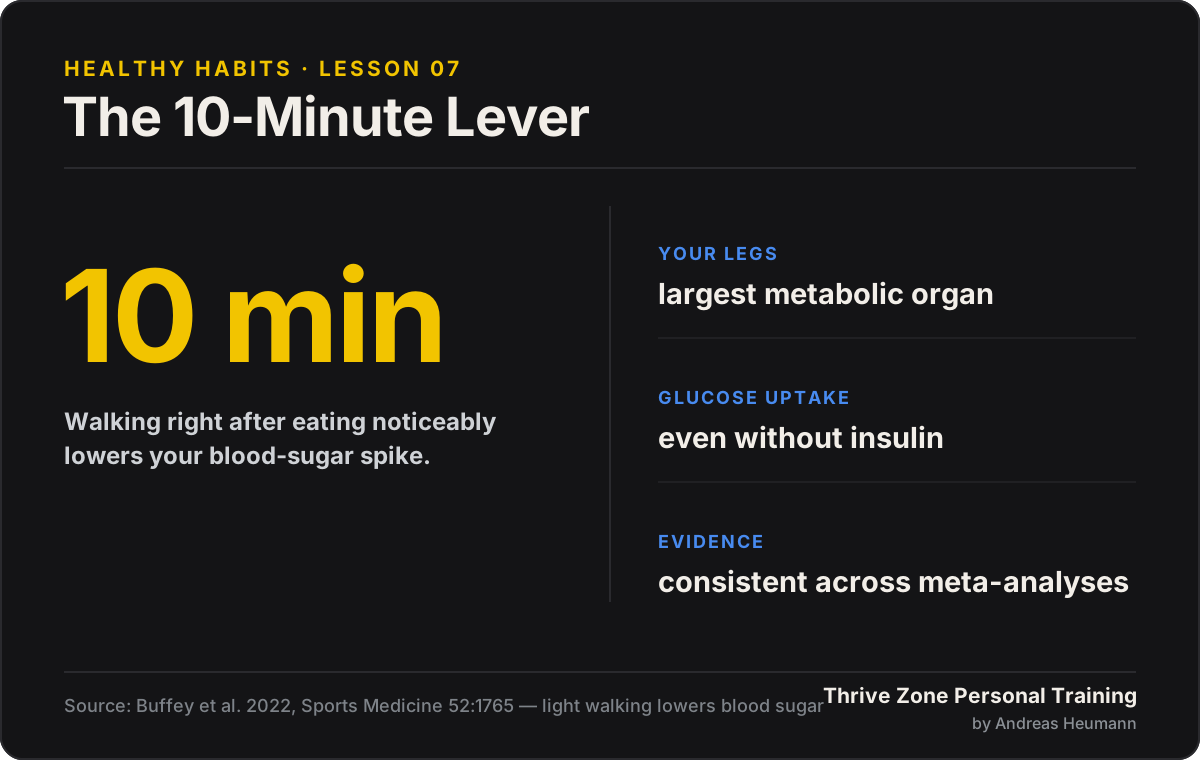
Why it works: your legs are a metabolic organ
Your leg muscles are the largest muscle mass in your body. The moment they work — and easy walking is enough — they pull glucose straight from the blood to fuel the movement. The remarkable part: working muscles open their glucose transporters without insulin. So you relieve exactly the system that, for most of us, is over-taxed in everyday life anyway.
The ten minutes after eating help decide what your body makes of the meal. Move instead of sit — and your muscles take over part of the work your insulin would otherwise have to do.
The evidence — remarkably consistent
That light movement after eating lowers the blood-sugar response is shown consistently across meta-analyses, randomised trials and different target groups:
A meta-analysis on interrupting prolonged sitting shows: even light walking significantly lowers blood-sugar and insulin levels after eating — more clearly than standing, and clearly compared with continuous sitting.
Buffey AJ et al. (2022). The Acute Effects of Interrupting Prolonged Sitting Time in Adults with Standing and Light-Intensity Walking. Sports Medicine 52:1765–1787. DOI: 10.1007/s40279-022-01649-4 · Systematic review + meta-analysis
In 41 adults with type-2 diabetes, the advice "walk for 10 minutes after each main meal" lowered post-meal blood sugar by around 12% compared with "walk for 30 minutes at any time of day" — the biggest effect showed after dinner, at around 22%.
Reynolds AN et al. (2016). Advice to walk after meals is more effective for lowering postprandial glycaemia. Diabetologia 59:2572–2578. DOI: 10.1007/s00125-016-4085-2 · Randomised crossover study
In older adults at increased diabetes risk, three 15-minute walks after meals improved 24-hour blood-sugar control — more effective after dinner than 45 minutes of walking in one go.
DiPietro L et al. (2013). Three 15-min Bouts of Moderate Postmeal Walking Significantly Improves 24-h Glycemic Control. Diabetes Care 36(10):3262–3268. DOI: 10.2337/dc13-0084 · Randomised crossover study (small, N=10)
The rule of thumb: 10 to 15 minutes of easy movement after each main meal — and if you only manage one, make it after dinner.
It doesn't have to be a walk — just move
Here's the point many people miss: the lever isn't "the walk". The lever is light muscle work. Your muscles don't distinguish why they move — they pull glucose from the blood the moment they work. Whether you take a turn around the block, clear the table, empty the dishwasher, vacuum or mow the lawn in the garden, your metabolism doesn't care. What counts: you don't sit after eating.
The same meta-analysis shows a clear ladder: even standing lowers blood sugar compared with sitting — but light movement does so far more (and lowers insulin on top). So it's the active muscle that makes the difference, not a particular form of movement.
Buffey AJ et al. (2022), Sports Medicine 52:1765–1787. DOI: 10.1007/s40279-022-01649-4 · Meta-analysis. Note: the studies themselves measured standardised light walking and standing — household activity falls in the same intensity class ("light activity") and works through the same mechanism, but was not tested as a separate modality.
How to fit it in without it looking like a programme
The beauty of this habit: it needs no equipment, no slot in the calendar, no changing of clothes. Variants from coaching practice — walking or being active:
- Get active around the house — clear up, empty the dishwasher, tidy, vacuum. Movement that's due anyway, placed right after the meal.
- Into the garden — mow the lawn, tend the beds, water. Light load in fresh air, with a light bonus on top.
- Walk the talk — take phone calls after eating on your feet
- Walk the meeting — short discussions as a walking meeting
- Walk the dog — put the dog's round right after the meal
- Walk to the store — small errands on foot, straight after eating
- After-dinner walk — the evening round as a fixed ritual, alone or as a pair
- Morning walk — after breakfast, with a bonus effect (more on that in a moment)
Your pace: easy. You don't need to sweat or get out of breath — the muscle should work, not your ambition. And the best part: the movement that's already in your day counts fully.
The bonus in the morning: light
The walk after breakfast has a double effect: it regulates your blood sugar and gives your eyes the morning light that sets your body clock — better sleep in the evening included. Why that is so powerful, you'll read in the lesson In Sync with the Sun.
New lessons every two weeks, straight to your inbox
The Healthy Habits pillar is growing: morning light, evening routine, everyday movement — the habits that carry everything else. One lesson after another, always with something you can put into practice today.
Join the newsletterSources
Buffey AJ et al. (2022). Sports Medicine, 52:1765–1787. DOI: 10.1007/s40279-022-01649-4 — meta-analysis
Reynolds AN et al. (2016). Diabetologia, 59:2572–2578. DOI: 10.1007/s00125-016-4085-2 — randomised crossover study
DiPietro L et al. (2013). Diabetes Care, 36(10):3262–3268. DOI: 10.2337/dc13-0084 — randomised crossover study (N=10)
Mechanism (insulin-independent glucose uptake by working muscle): established textbook physiology, presented without individual-study citations.


