The Resistance Principle
We live in a world optimised for comfort — and that is exactly the problem. Without friction the body grows weaker, the mind duller, the character softer. Growth has one prerequisite you can't get around: resistance.
Food is everywhere, available at all times, engineered for maximum pleasure. The thermostat sets the temperature, the car drives the route, the feed delivers the entertainment — tailored to you to the millimetre. Physically, life asks almost nothing of you anymore. That sounds like progress. And in many ways it is. But it comes with a price hardly anyone has on their radar.
Your body and mind run on a simple rule: what isn't demanded fades. Muscles that lift nothing waste away. A cardiovascular system that's never challenged grows sluggish. An attention that only jumps between stimuli loses the ability to stay with one thing. In a frictionless world, standing still isn't a pause — it's a slow decline.
Resistance isn't your enemy — it's your ally. Cold, a heavy barbell, a genuine mental challenge — they all follow the same principle: friction strengthens you. Body, mind and character. You just have to choose it. Every day.
Why friction strengthens — the principle behind it
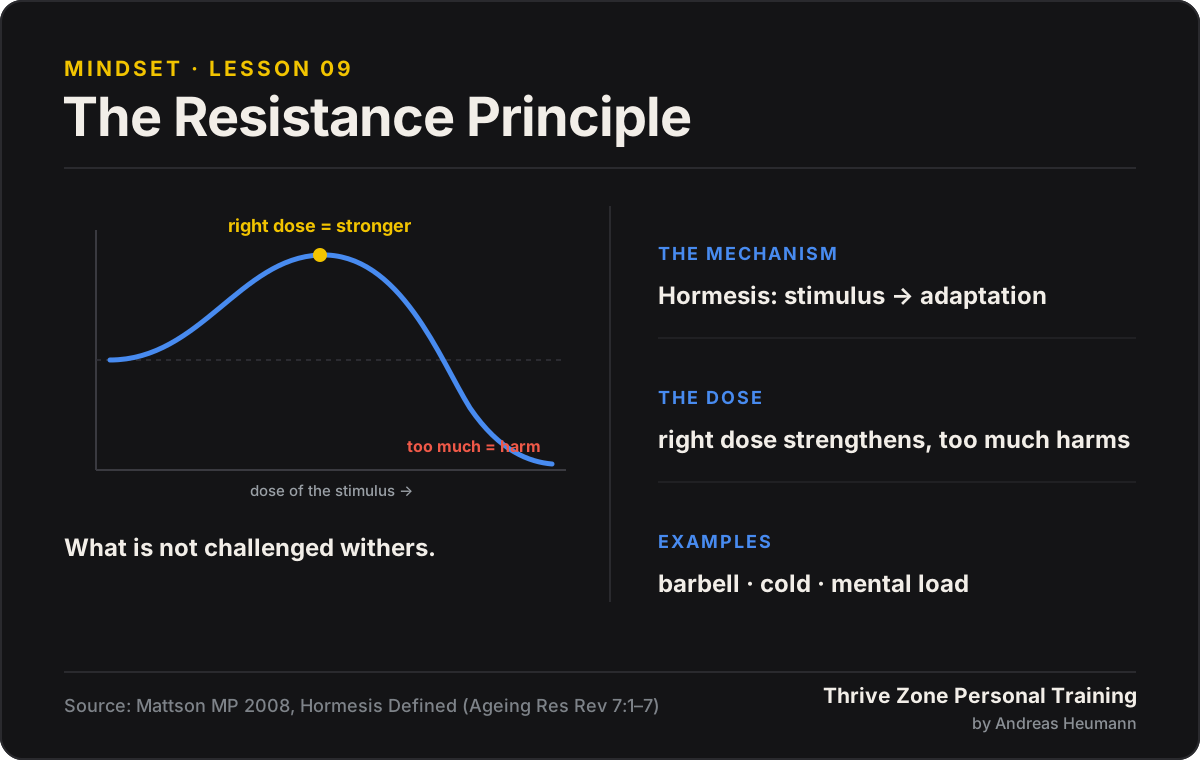
This isn't willpower folklore, it's biology. Science calls the underlying pattern hormesis: a dosed stressor that would harm in large amounts triggers, at the right dose, an adaptation that leaves you stronger than if you'd never been challenged.
Hormesis describes the adaptive response of cells and organisms to a moderate, usually intermittent stressor: low doses are protective and improve performance, high doses harm. Established examples include physical training, calorie restriction and brief heat/cold stimuli.
Mattson MP (2008). Hormesis Defined. Ageing Research Reviews 7(1):1–7. PMC2248601 · Review article (established state of research)
Strength training is hormesis in its purest form: you give the muscle a stimulus that briefly overtaxes it — and in recovery it rebuilds stronger. So is cold, fasting, even focused learning. The common denominator: a stimulus that demands something of you, followed by recovery, in which the adaptation happens.
Growth isn't sudden — it's gradual
Here sits the crucial caveat that separates the principle from mere "grind yourself down": the dose is everything. The same stimulus that strengthens you in the right amount harms you in the wrong one.
Jump into ice-cold water without ever having accustomed your body to cold, and you overwhelm your circulation. Load 100 kilos on the bench when you cleanly move 40, and injury is pre-programmed. That's not a contradiction of the principle — it is the principle. Growth comes from steady, progressively increasing load, not from a one-off heroic effort.
The rule of thumb: seek meaningful resistance — and dose it. Better a step today that you manage cleanly, and a little more tomorrow, than a leap that throws you back. Consistency beats heroics.
The illusion of control
While the world quietens you, it simultaneously sells you a feeling of control — but over the wrong things. You adjust the feed, the thermostat, the playlist. That gives you a sense of mastery. Only none of it builds you. It just pacifies you.
Real control doesn't come from steering lifeless systems, but from engaging with life itself:
- You don't control the cold — but you can adapt to it.
- You don't control the weight of the barbell — but you can grow stronger to lift it.
- You don't control the chaos of life — but you can build the resilience to thrive in it.
That's the difference between being occupied and growing. One feels good and leaves you where you are. The other challenges you — and moves you forward.
How to bring it into your day
You don't need an extreme programme for this. You need a decision you make daily: at one point, deliberately not taking the easier path. The stairs instead of the lift. The cold end of the shower. The set that really demands. The task you keep putting off — done first.
And on stressful days, the ThriveZone "Better Than Nothing" principle applies: better the mini-version of resistance than none at all. Thirty seconds cold instead of three minutes. One demanding set instead of the whole workout. The stimulus counts, not its size — because what matters is that the habit doesn't break.
Choose a resistance today that you don't have to take on, but could — and take it. Again tomorrow. That's how you build not just a body, but a character that knows it can rely on itself.
This principle is the foundation under much of what's still to come in the Academy: it's why progressive strength training works, why cold stimuli have an effect, and why the years in full function — your healthspan — aren't down to luck, but the result of many small, deliberately chosen resistances.
New lessons every two weeks, straight to your inbox
The Mindset pillar is growing: how you make decisions, deal with resistance and stay consistent — especially on days when motivation is elsewhere. Sign up and you'll get each new lesson first.
Join the newsletterSources
Mattson MP (2008). Hormesis Defined. Ageing Research Reviews, 7(1):1–7. PMC2248601 — review article
Progressive overload in strength training, cold/fasting adaptation as hormesis examples: established research and textbook knowledge, presented here as a principle. The "Resistance Principle" as a way of living is Andreas' framework — grounded in hormesis, but as an attitude it's a thesis, not a measured value.