Active time and hands-off time
When a recipe says “one hour”, most people read: no time. But that hour usually mixes two very different things — the minutes you actually work, and the time the oven, stove or fridge does the work for you. Once you see the difference, cooking for yourself becomes much more realistic.
If a recipe says “1 hour 20 minutes”, your brain does the obvious thing: too long, skip it. But that number is often misleading. It combines chopping, stirring and seasoning with simmering, baking, cooling or resting — and only one of those blocks really asks something from you.
That's why I separate every recipe into two kinds of time.
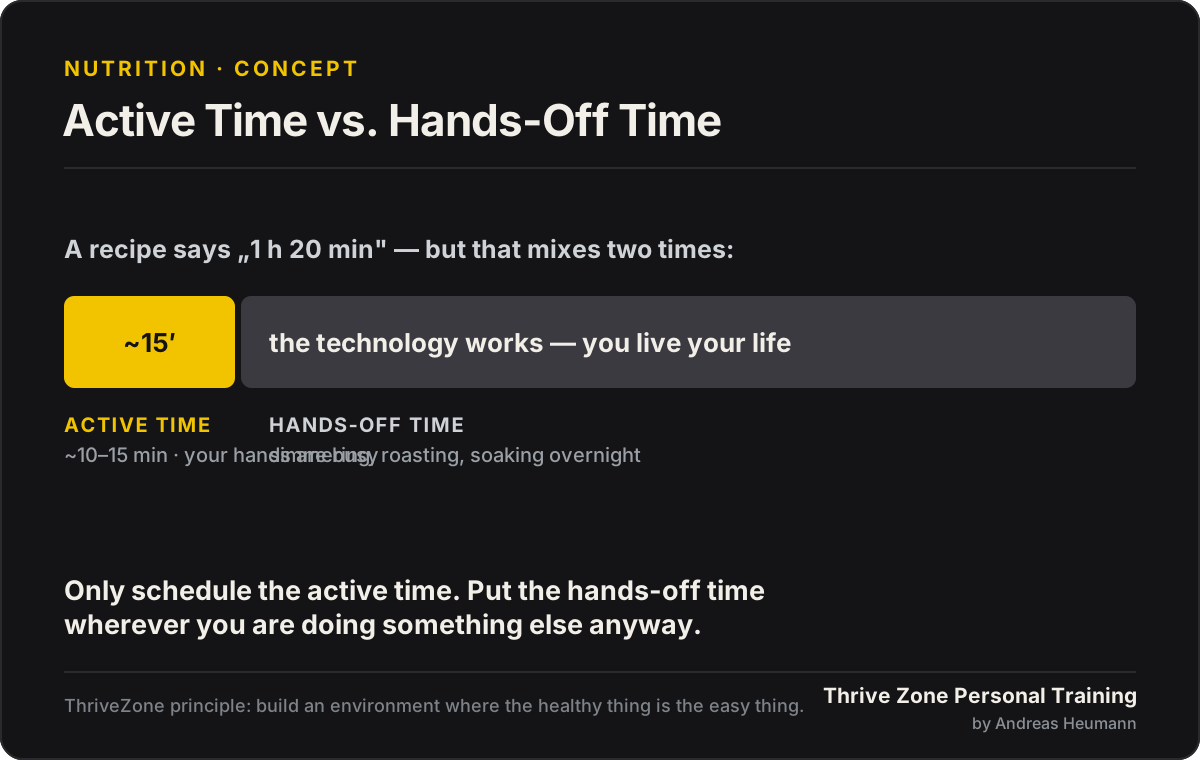
Active time — the minutes you're actually working
Active time is the part where your hands are involved: chopping vegetables, browning meat, seasoning, stirring, plating. This is the part you need to plan for. In many ThriveZone Meals that active work is surprisingly short — often ten to fifteen minutes.
Hands-off time — when the kitchen does the work
Hands-off time is what happens after you've started the process. The soup simmers. The sweet potato roasts. The oats sit in the fridge overnight. The food keeps moving forward while you get on with something else. A broth gets better while you sit in a call. Vegetables roast while you answer emails. Overnight oats are ready in the morning because you did five minutes of work the evening before.
The long number on the recipe is usually not your time. You get the dish started in a few focused minutes — and the rest happens while you get on with your day.
Why this is more than a kitchen trick
In the ThriveZone Framework it's always about building your environment so the healthy thing becomes the easy thing. Technology is part of that: stove, oven and fridge are tools that take the dull work off your hands so you have energy for what matters. You use them to your advantage — the same way you reach for the right tools at work to get to the result faster.
In a home office that's a real lever: in the morning you sear your bone-broth base in ten minutes, set it to a low flame — and keep working. An hour later you have a warm, nourishing meal without having spent an hour on it. Once you get this, you suddenly cook for yourself far more often.
The rule of thumb: read every recipe time as two numbers — how much of it is work, and how much the kitchen does. Schedule only the active time into your day. Let the hands-off time run wherever you're already doing something else.
How to read it on our recipes
That's why every ThriveZone Meal now shows two figures: a badge for the active time (your hands-on minutes) and — where it applies — a second one for the hands-off time, meaning cooking time, oven time or “overnight.” So you can see at a glance what a dish really costs you before you decide.
Meals that fit
From the ThriveZone Meals — real macros and hands-on times.


New recipes & lessons every two weeks
The ThriveZone Meals grow step by step — solid recipes with real macros, built around the five-pillar system. Sign up and you'll get them first.
Join the newsletter