Hinge and Single Leg
Part 1 gave you the pattern. Part 2 gave you the activation. Now the hip goes under load — the real goal: not endless corrective drills, but a hip that holds up in everyday life and sport. Two patterns matter most here: the hinge (bending and lifting from the hip) and the single leg (strength and control on one leg). Add rotation, a quick look at the ankle, and a simple way to put it all together over the weeks.
The progression from Part 2 still holds: activate first, then move, then load. What this part adds is the load — but always on a base you activated first.
Corrective work is the ramp. Strength is the destination. The activation from Part 2 now feeds two everyday patterns: the hinge and the single leg. Mobility and strength meet here: range you can control under load. The goal isn't to stay in little rehab drills forever — it's a hip that can lift, walk, climb stairs and handle sport without the lower back having to cover for it.
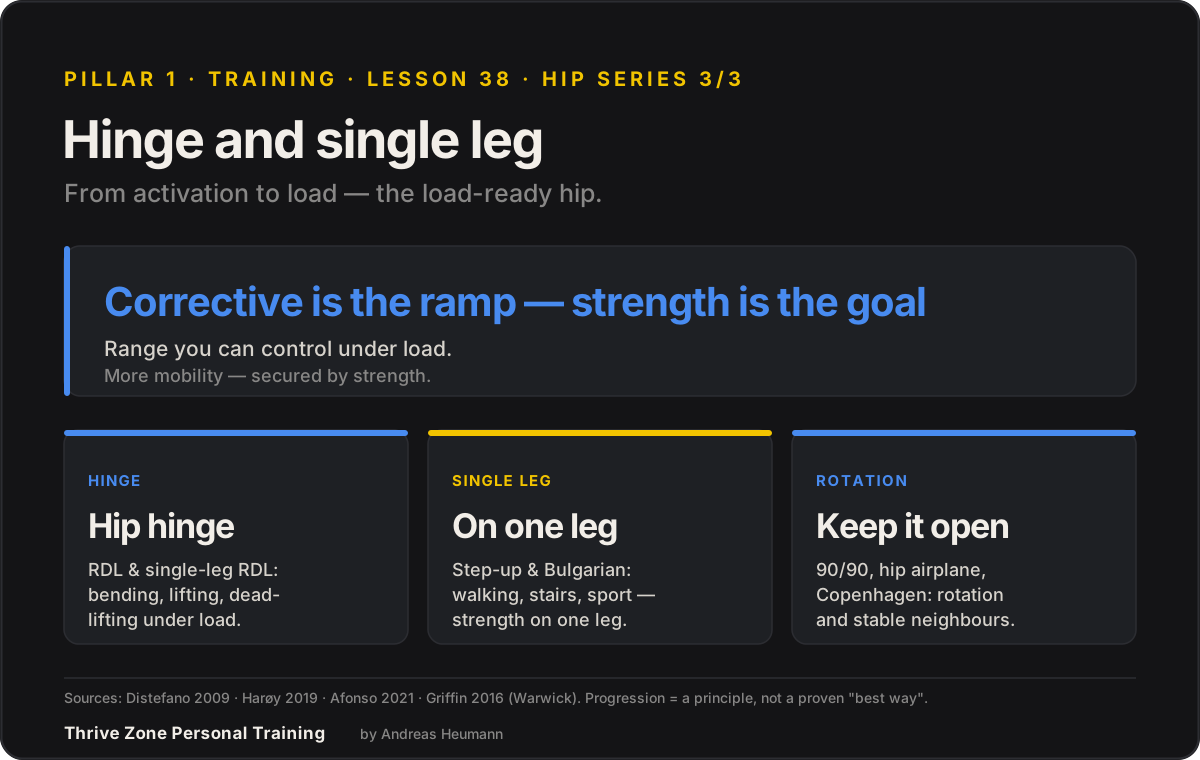
As in Part 2: this isn't a complete list of every useful hip exercise. These are the building blocks I trust most in practice, because they show the pattern clearly and progress well.
Block D — The hinge: the hip hinge
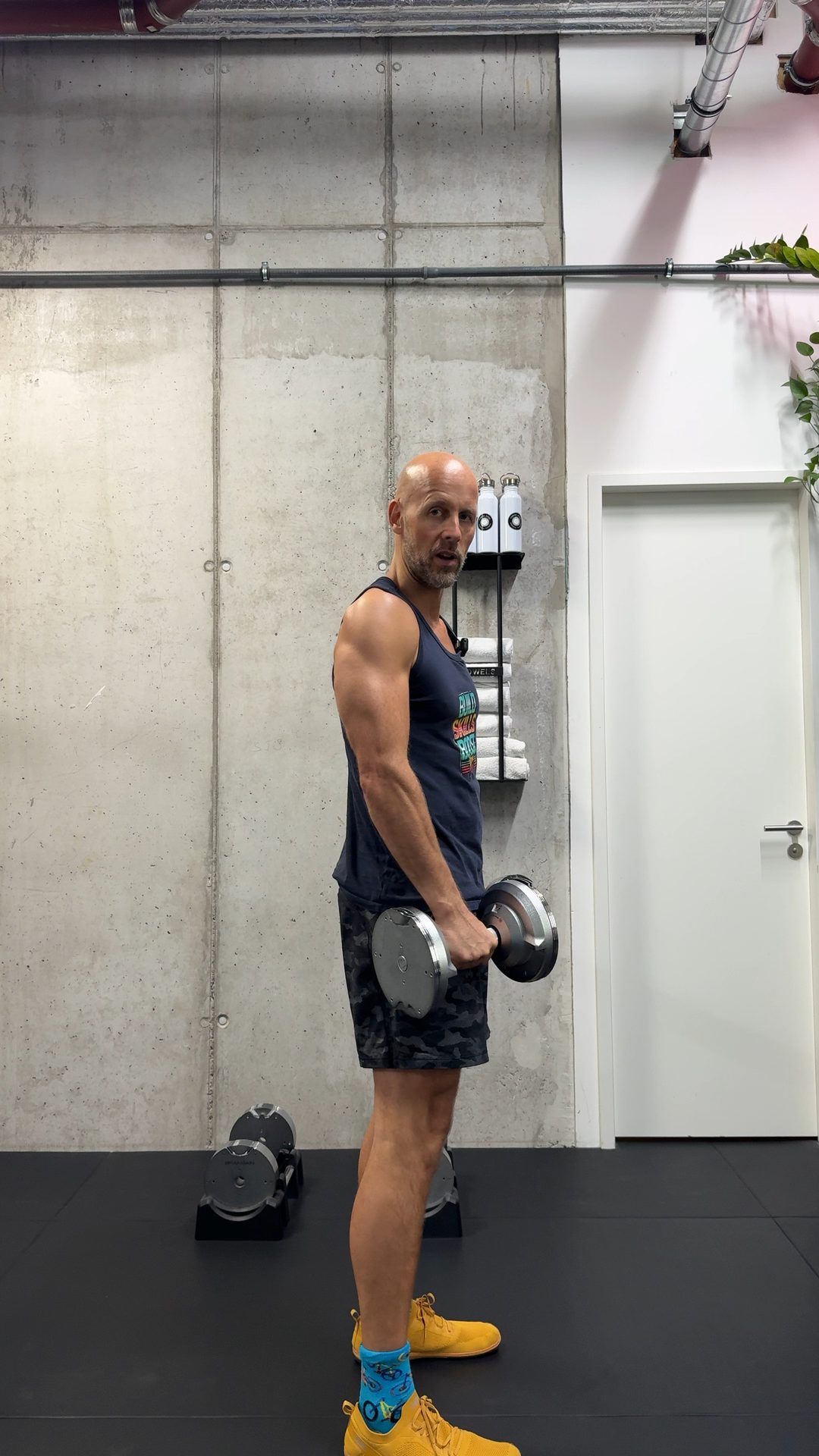
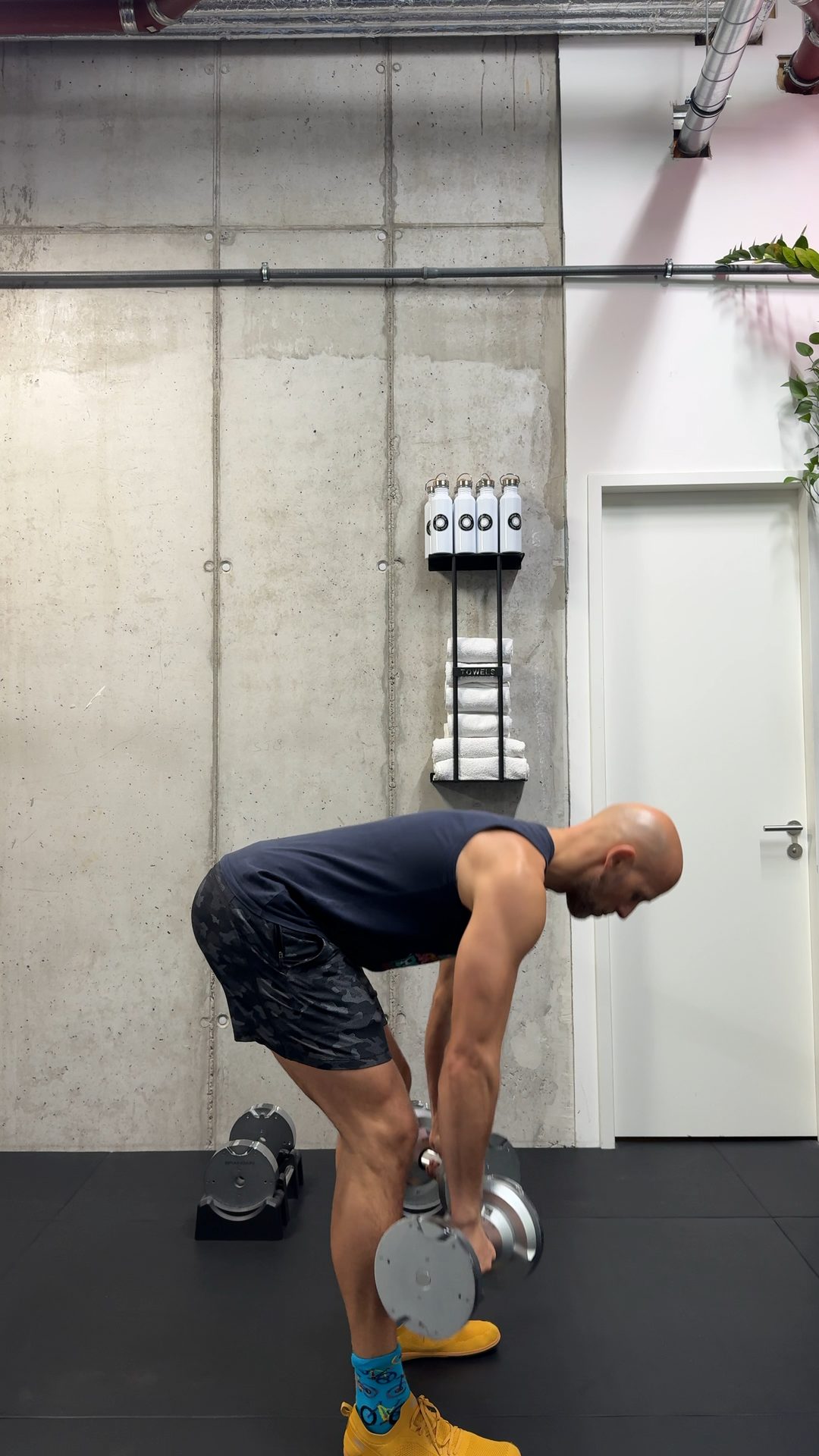
Romanian deadlift (RDL)
Block D · the base pattern under loadWith dumbbells, push the hips back, keep the spine long, guide the weight down close to the legs, then drive back up from the glutes. Why: the RDL is the hinge under load. It loads the glutes and hamstrings in a lengthened position and teaches the body to bend and lift without dumping the work into the lower back.
Cue: hips back, shins almost vertical, spine long. Lower slowly — don't just let the weight fall.
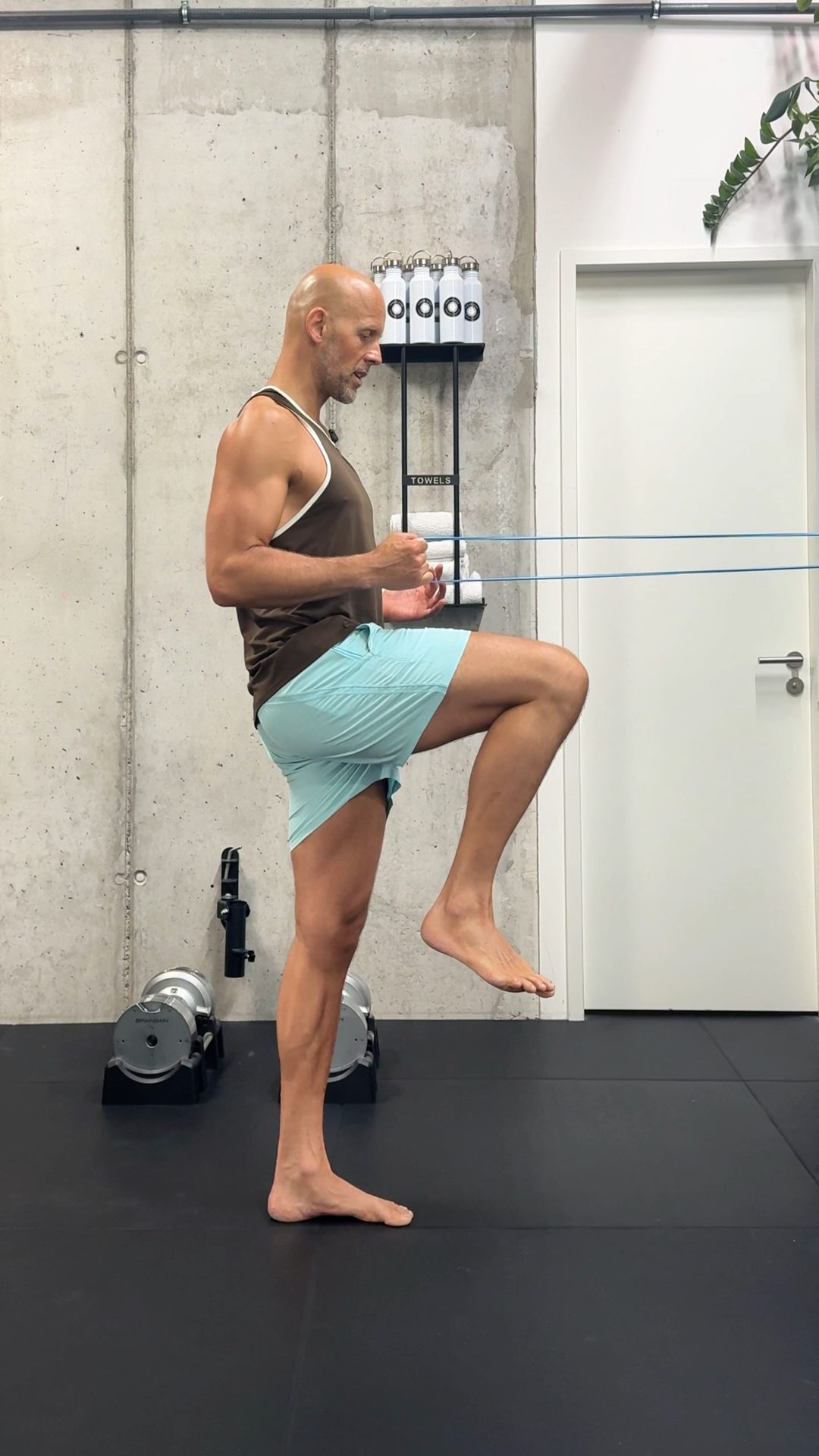
Single-leg RDL
Block D · single leg, reveals left-right differencesThe same hinge on one leg. The pelvis stays square; the free-leg side doesn't open toward the ceiling. Why: the single-leg RDL shows left-right differences immediately. It trains hip control, balance and rotation at the same time — very close to what walking keeps asking for.
Cue: slow first, balance before weight. Add load only when both sides run cleanly.
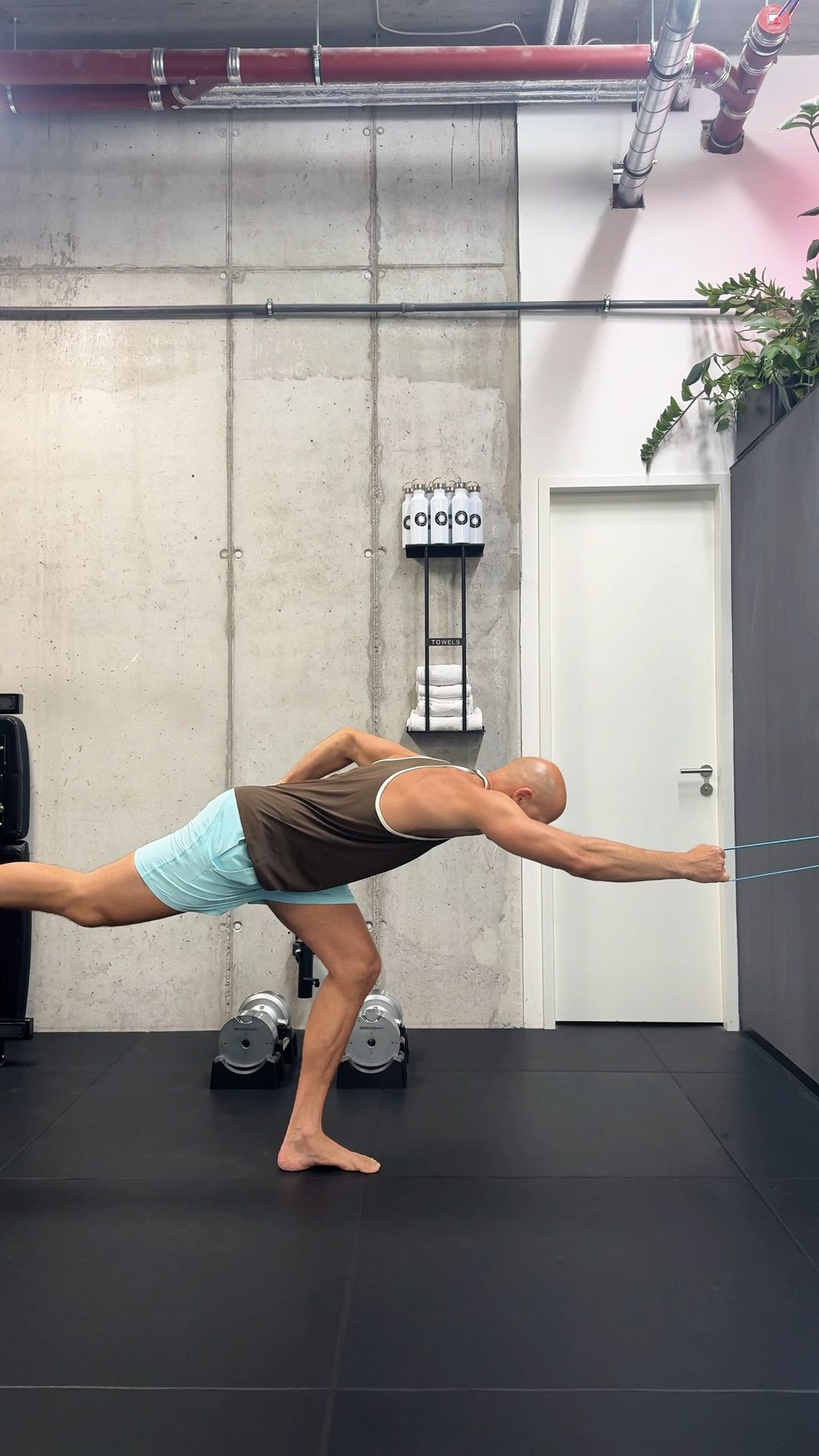
That strength training through a full range is more than strength: it improves flexibility on par with pure stretching — while building strength. The RDL, with a long controlled lowering phase, is exactly that kind of exercise.
Afonso J, et al. (2021). Healthcare 9(4):427. DOI: 10.3390/healthcare9040427 · Alizadeh S, et al. (2023). Resistance training induces improvements in range of motion. Sports Med 53:707–722. DOI: 10.1007/s40279-022-01804-x · Meta-analyses.
Block E — The single leg: single-leg strength
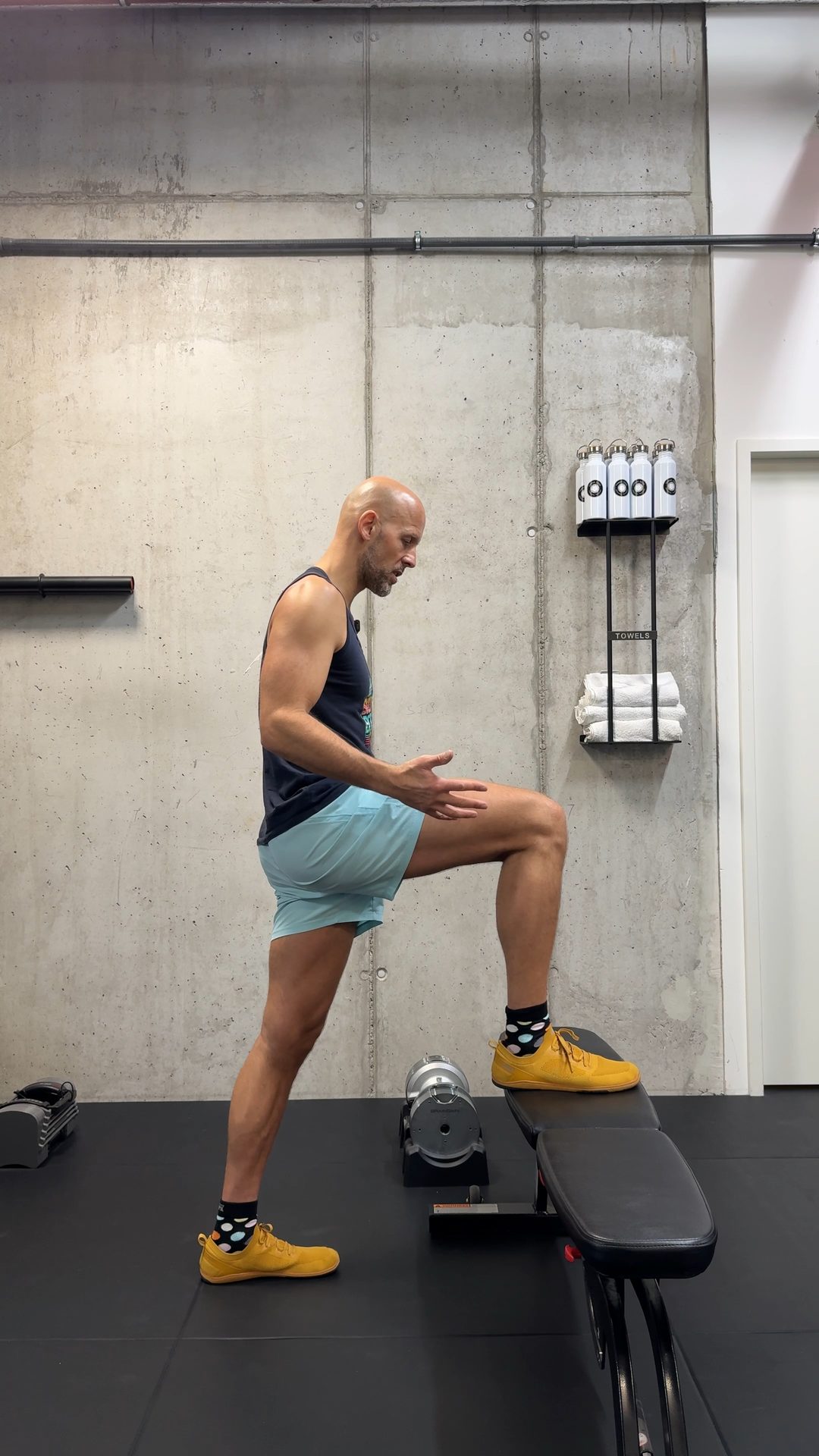
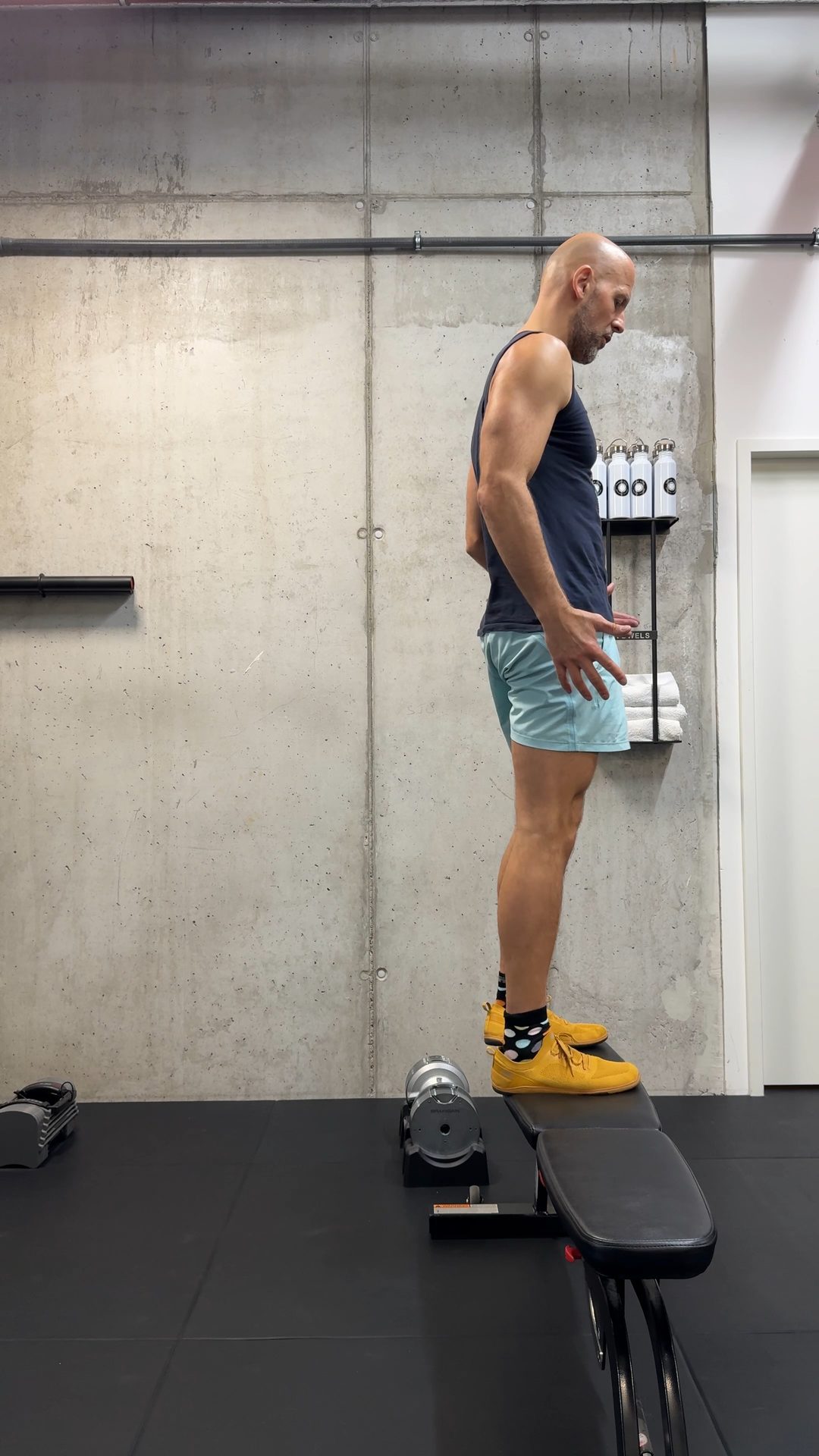
Step-up (controlled, emphasise the lowering)
Block E · a safe way back inStep onto a stable box, stabilize briefly at the top, then lower slowly. Why: the step-up forces real single-leg work — you can't hide behind the other leg as easily. For me it's often the safest way back into load when the hip has been irritated.
Cue: whole foot on the box, knee tracking over the foot, pelvis level. The lowering isn't the boring part — it's where the work happens.
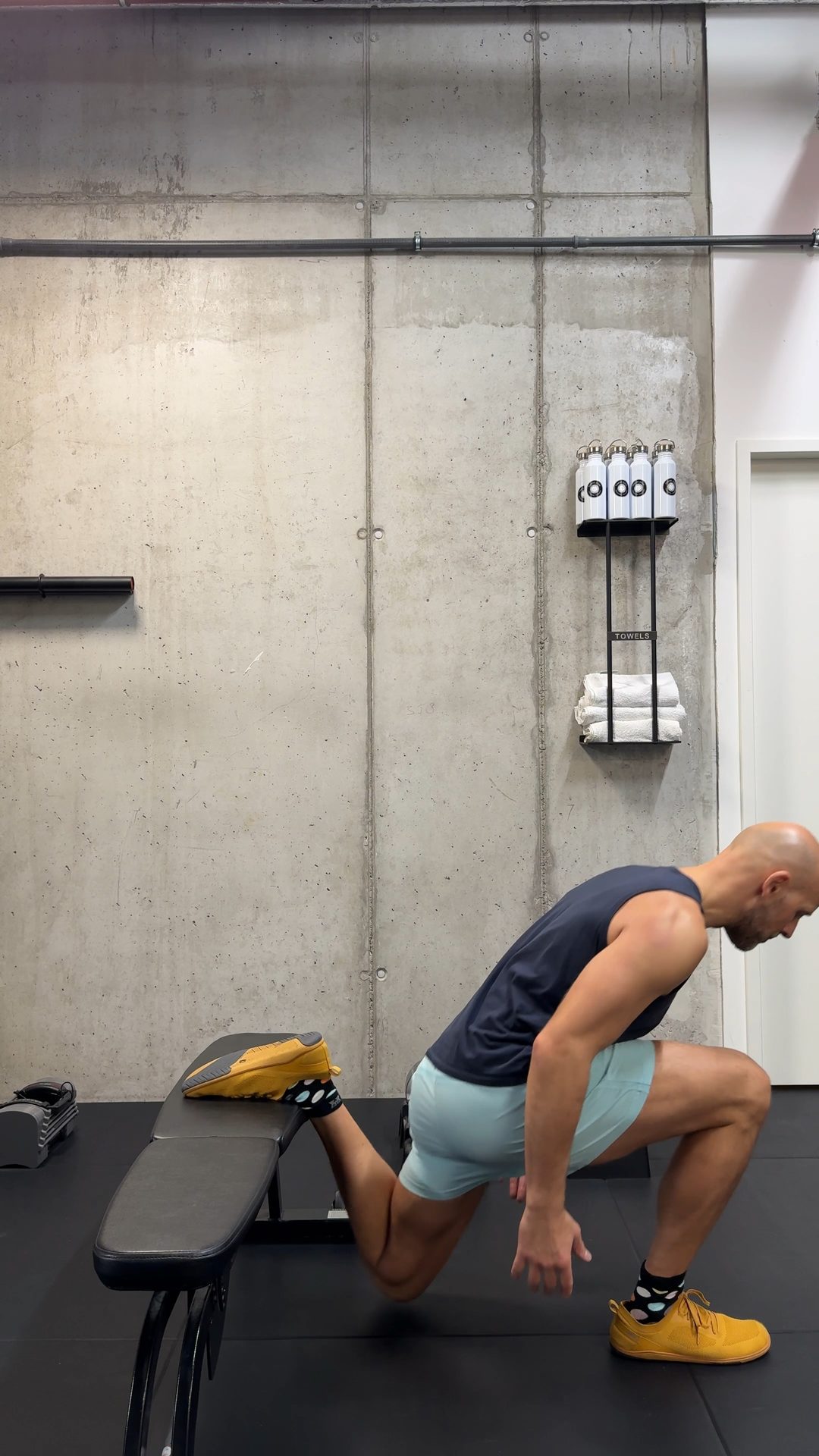
Bulgarian split squat & reverse lunge
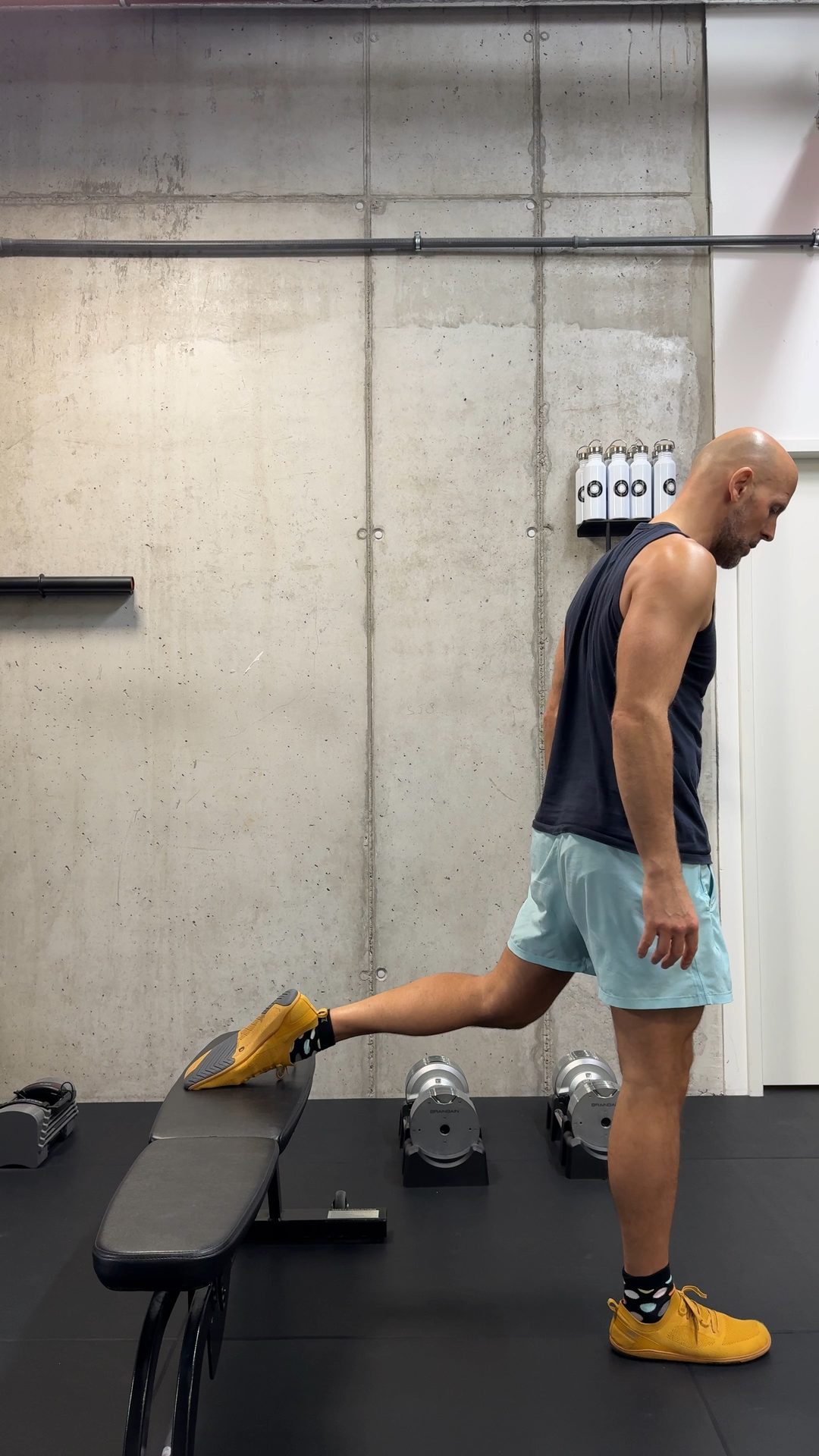
Block E · strength and length in oneBack foot elevated for the Bulgarian split squat, or step back into a reverse lunge. Why: the front leg builds strength while the back hip gets active length — strength and length in one movement. The Bulgarian comes later, once the hip is stable enough for it.
Cue: torso upright to slightly forward, knee tracking over the foot, pelvis still. Let the hip do the work.
Single-leg squats and single-leg deadlifts are among the exercises with the highest gluteus maximus activation of the common rehab moves — good reason to make the single leg the center.
Distefano LJ, et al. (2009). Gluteal muscle activation during common therapeutic exercises. J Orthop Sports Phys Ther 39(7):532–540. DOI: 10.2519/jospt.2009.2796 · EMG study.
Rotation & mobility — keeping the path open
90/90 switches & hip CARs
Rotation · the most commonly limited rangeSit with both legs at 90°, and switch from side to side. Add hip CARs: slow, active circles at the hip under your own tension. Why: rotation is often the range people are missing most, and it's often different from side to side. That can be one reason a deep hip bend catches on one side.
Cue: use the range you can control yourself — no forcing. Clean beats big.
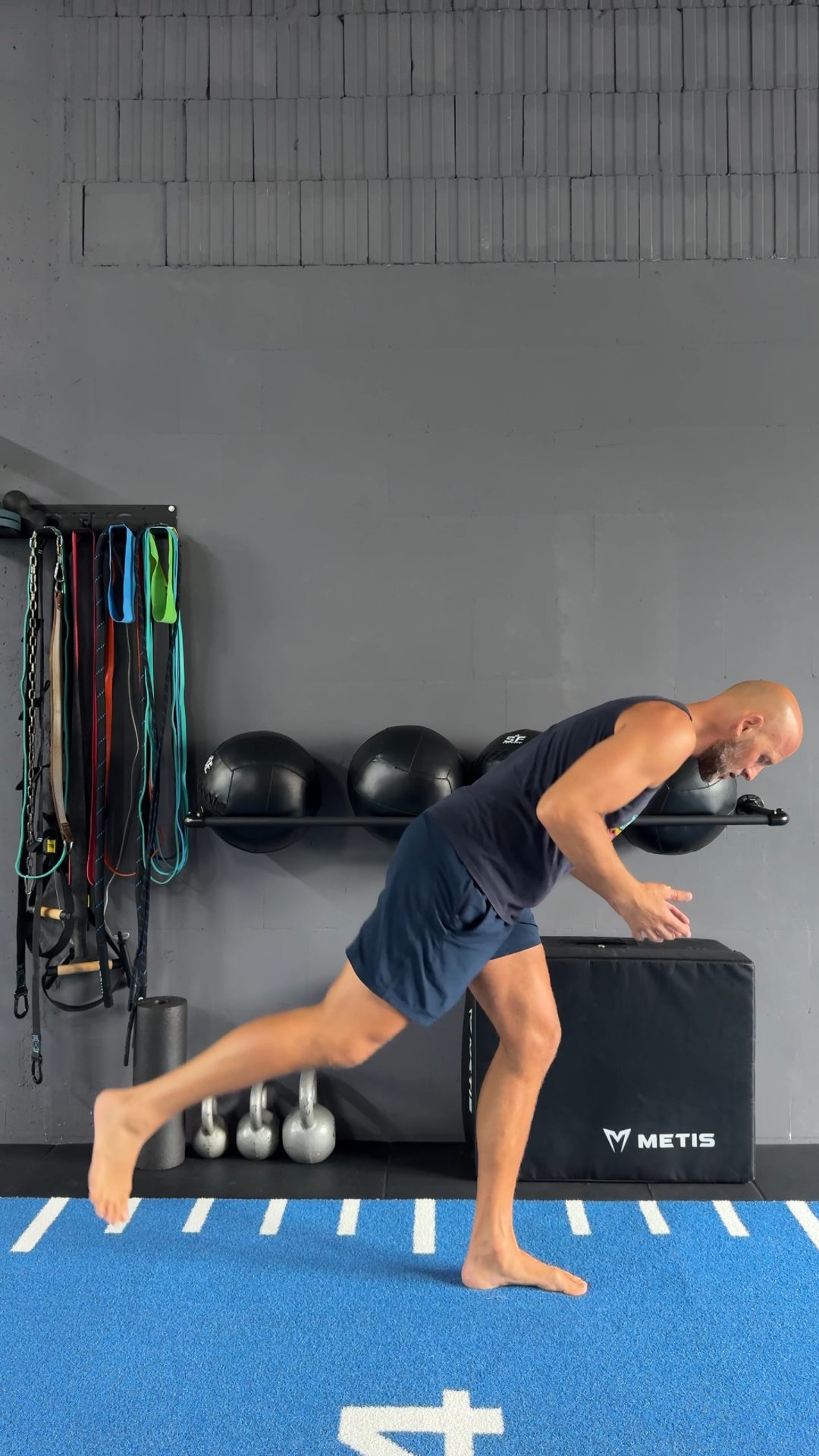
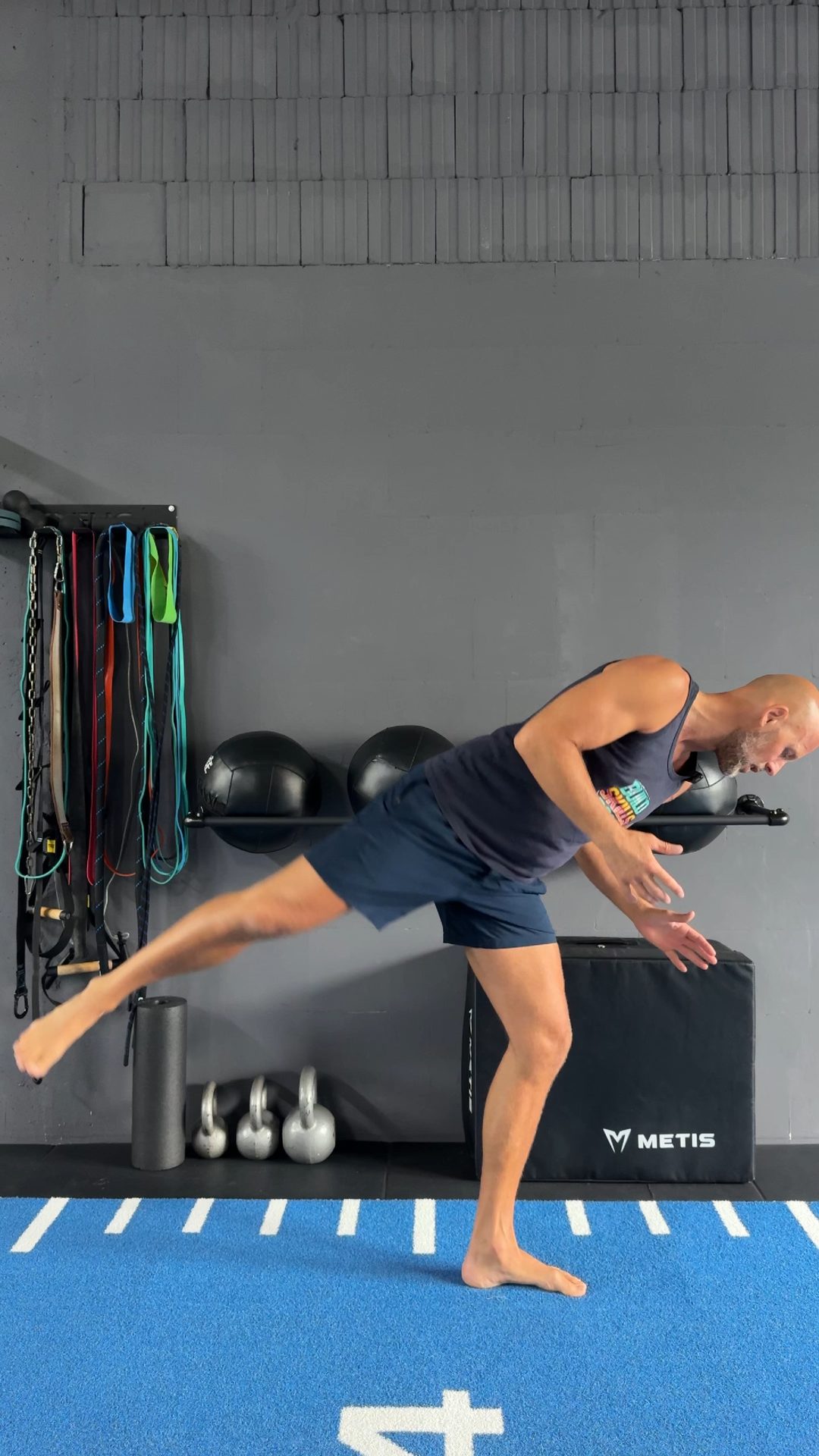
Hip airplane
Rotation · control on one leg (advanced)Stand on one leg, hinge forward slightly, and rotate the standing hip in and out under control. Why: it trains rotation and centering on one leg — exactly the thing you need when walking, turning and loading the hip in real life. Advanced: only add this once the single-leg RDL and step-up are solid.
Cue: the movement comes from the standing hip, not from twisting the back. Small range, full control.
Copenhagen plank
Adductors · stabilize the neighborsSide plank with the top leg on a raised surface, lift the pelvis and hold. Why: the adductors — the inner thigh — help stabilize the pelvis. They're the glutes' neighbors; when they're missing, the hip often feels less secure than it should.
Cue: lift straight, don't sag. Short and clean before long and ugly.
An adductor-strengthening program built around the Copenhagen exercise substantially lowered the rate of groin problems in a large trial (13.5% vs 21.3% per week). The inner thigh belongs in the hip programme.
Harøy J, et al. (2019). The adductor strengthening programme prevents groin problems among male football players (RCT). Br J Sports Med 53(3):150–157. DOI: 10.1136/bjsports-2018-099450 · Cluster-randomised trial.
Two additions that make the difference
The look downward — the ankle. If mobility or control is missing below (say, limited dorsiflexion or an old ankle issue), the hip above has to compensate. A quick check pays off: knee-to-wall side to side, and single-leg stance with eyes closed. Where one side clearly lags, a small daily foot/ankle routine belongs in the plan.
Depth under load varies. Some people feel a block in very deep flexion or internal rotation — that can come from the bony shape of the joint (femoroacetabular impingement syndrome, defined as a clinical triad). In practice: don't force into the position that flares it up; work in your available range (wider stance, less depth) and build activation. Nothing to worry about — just a reason to tailor it.
Hip impingement syndrome (FAI) is defined as an interplay of symptoms, clinical signs, and imaging — not every deep position fits every hip the same way.
Griffin DR, et al. (2016). The Warwick Agreement on femoroacetabular impingement syndrome. Br J Sports Med 50(19):1169–1176. DOI: 10.1136/bjsports-2016-096743 · International consensus statement.
How to put it all together over the weeks
The ratio principle stays the guardrail: as long as activation or range is missing, the building blocks from Part 2 come before heavy load. A workable framework:
- Activate (from Part 2): glute bridge → hip thrust with a top-hold, clamshell, daily mini activation — mostly static and controlled, as a daily base.
- Pattern & strength (this part): two to three lower-body sessions a week with the hinge (RDL, single-leg RDL) and the single leg (step-up, Bulgarian), plus rotation and Copenhagen. Progress gradually.
- Integrate load: once both run cleanly, heavier multi-joint strength (trap-bar deadlift, deeper squat within your available range) as the goal.
The daily mini activation can keep running in parallel — it takes minutes and is the best protection against slipping back. If you already train, just build the loaded variations in alongside the static base.
The arc of the whole series is simple: understand the pattern. Wake up the glutes and lengthen the front. Then carry that control into hinge, single leg and rotation under load. The result isn't just a more mobile hip — it's a hip that can actually use its range.
Part 2 — Activate and lengthen: recruit the glutes from static to hip thrust, lengthen the front.
Part 3 — Hinge and single leg (this piece): the hip under load — hip hinge, single-leg strength, rotation, and the build-up over the weeks.
- Activate and lengthen (Lesson 37) — the activation base this part builds on.
- Learning to pull (Lesson 32) — the same principle at the shoulder: from corrective to load-ready strength.
Let's find out what your hip needs
Does your hip need more range, more activation, more strength, or a different setup under load? Does the standing leg stay stable? How deep should you go? Which side is actually limiting you? That's hard to judge from the inside.
That's exactly what the trial session and the workshop are for: a person who sees what's happening in real time and adapts the plan to your body. In a world where almost everything runs through a screen, that's my deliberate counterpoint — direct coaching is often the shortest and most human way to actually get this into your body.
To the workshopPrefer one-on-one? Come to a trial session at the studio in Berlin-Mitte. New exercises come through the newsletter.
Sources
Afonso J, et al. (2021). Healthcare 9(4):427. DOI: 10.3390/healthcare9040427 · Alizadeh S, et al. (2023). Sports Med 53:707–722. DOI: 10.1007/s40279-022-01804-x — strength through a full range improves flexibility.
Distefano LJ, et al. (2009). J Orthop Sports Phys Ther 39(7):532–540. DOI: 10.2519/jospt.2009.2796 — single-leg squat/deadlift: high gluteus maximus activation.
Harøy J, et al. (2019). Br J Sports Med 53(3):150–157. DOI: 10.1136/bjsports-2018-099450 — adductor programme lowers groin problems (RCT).
Griffin DR, et al. (2016). Br J Sports Med 50(19):1169–1176. DOI: 10.1136/bjsports-2016-096743 — Warwick Agreement, FAI syndrome defined.
The sequence activate → pattern/strength → load is a well-established progression principle, not a "best way" proven by a single study. For persistent or severe pain, numbness, or loss of strength, see a doctor.