The frame that carries your day
You now know the individual levers — light, movement after eating, sleep, breath, cold. This lesson is the bracket around them: how to assemble them into a day that carries you instead of overwhelming you. That's the Daily Structure.
In the end, all of life is the sequence of more or less good days. So if you're thinking about how to unfold your potential, the lever isn't somewhere off in the distance — it's today. And here's the uncomfortable part: if you don't shape your day yourself, circumstances or someone else will shape it for you. Whoever sets no priorities of their own follows those of others.
The Daily Structure is exactly that — your self-set frame. Not a rigid timetable, but a scaffold on which your most important habits get a fixed place, so they don't get lost in the day.
You don't need ten new resolutions. You need a day built so that the healthy thing happens almost by itself. Structure beats willpower — every day.
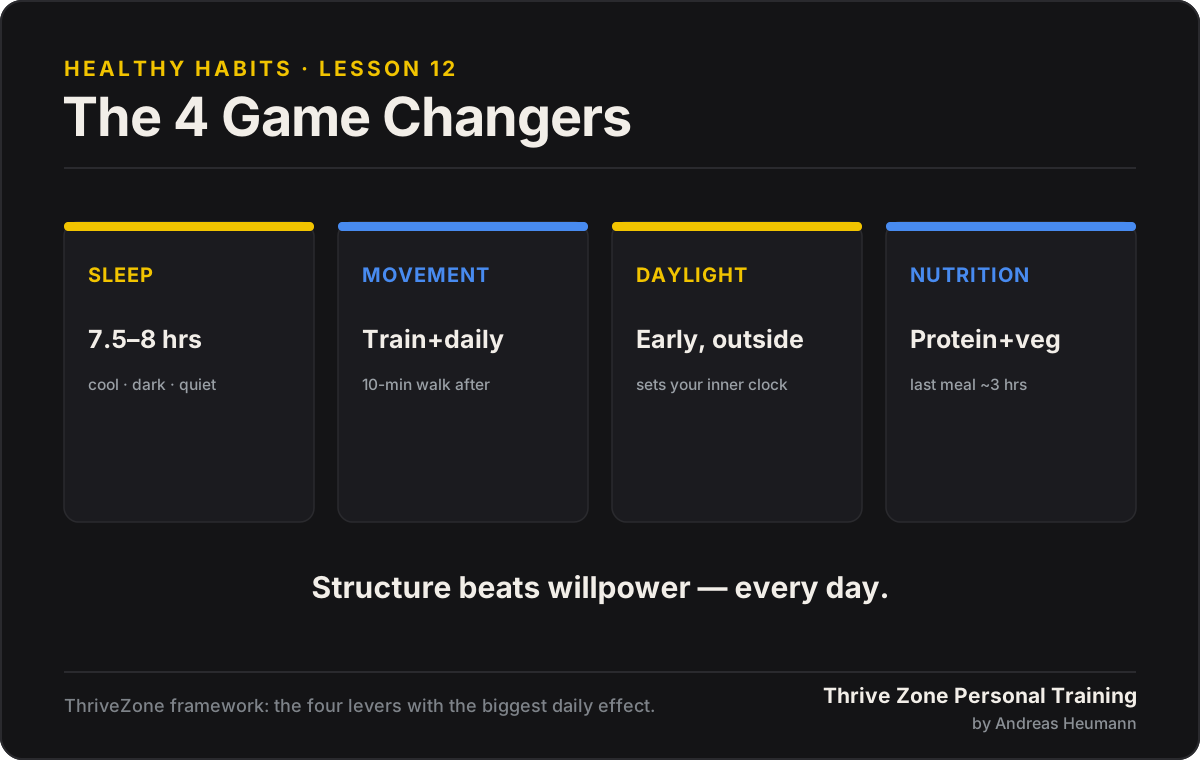
The four game changers — the foundation
Before the daily flow, the four things with the biggest leverage. If only these four stand, most of it stands:
- Sleep. 7.5–8 hours, cool, dark, quiet, no screen in the room. The foundation for recovery, hormones and a clear head. How to build the evening for it: Good sleep starts two hours before bed.
- Movement. Deliberate training plus plenty of everyday movement. Both count — the 10-minute lever after eating is the easiest way into the everyday side.
- Daylight. As early as possible, outside. The timekeeper for your inner clock — the full background is in In Sync with the Sun.
- Nutrition. Protein-rich, plenty of vegetables, good fats; the last meal around three hours before sleep. Food first — the whole Nutrition pillar builds on this.
A day along your inner clock
Picture the day as three anchor points everything else hangs on — morning, middle, evening:
The morning sets the day. Water right after waking, light in the eyes, movement. If you like, a short cold stimulus at the end of the shower and a few deliberate breaths — both switch you on, awake and clear. Then a protein-rich first meal, followed by a short walk. This block decides what condition the rest of the day runs in.
The middle keeps you moving. Focus blocks instead of constant multitasking, stand up and stretch every one to two hours, walk after meals instead of sitting. No heroics — many small interruptions of sitting add up to the actual effect.
The evening winds you down. Last meal with distance to sleep, training finished in good time, lights dimmed, screens down. The extended exhale (4:6) or a few minutes of reading are the signal to your nervous system that the day is over.
Important: the clock times don't matter. The Daily Structure hangs on your inner clock, not the wall clock — on sunrise and sunset, on your chronotype (owl or lark), on your life. An early type and a late type build the same day around completely different hours. The system adapts to you, not the other way round.
Modular, not monolithic
You don't have to introduce everything at once — that's actually the surest way to fail. The Daily Structure is modular: each element can be added, adjusted or swapped on its own. Start with one or two blocks (morning light + a walk after eating, say) and add more as the first ones settle. That way the structure grows with you instead of burying you.
"Better Than Nothing" — the trick against breaking the chain
No day runs like the textbook. That's exactly what the mini-versions are for: on stressful days you make the stimulus small instead of skipping it.
- Cold: 30 seconds instead of three minutes
- Breathing: one round instead of three
- Mobility: two minutes instead of ten
- Journal: one line of gratitude instead of a page
Consistency matters more than perfection. The short version keeps you in flow and stops the habit from breaking entirely. One small block, every day, beats the perfect programme you drop after a week.
Build the environment that carries you
The underrated part: willpower is limited, your environment works around the clock. Make the healthy thing visible and easy — the filled water bottle on the table, the mat next to the desk, "do not disturb" and a blue-light filter automated for the evening. Each of these small things takes a decision off your plate and handles it for you. That's the ThriveZone idea: build the day so the right thing is the easiest path.
The individual lessons give you the building blocks. The Daily Structure is the box they belong in — and the reason good intentions eventually become a life in full function.
New lessons every two weeks, straight to your inbox
This lesson is the bracket of the Healthy Habits pillar. Sign up and you'll get each new lesson straight to your inbox — and step by step you build your day.
Join the newsletterSources & note
This lesson summarises the ThriveZone Daily Structure concept — Andreas' practical frame for the Healthy Habits. The scientific evidence for the individual building blocks is in their respective lessons: light & inner clock, movement after eating, sleep, breathing, cold exposure. The daily structure itself is an organising principle, not a measured value — the clock times are illustration, not prescription.