My cold-conditioning routine — six weeks to a cold shower
Cold feet the moment you step outside? This routine gets your body used to the cold one step at a time, exactly the way I did it myself. Includes a checklist you can tick off and the science behind it.
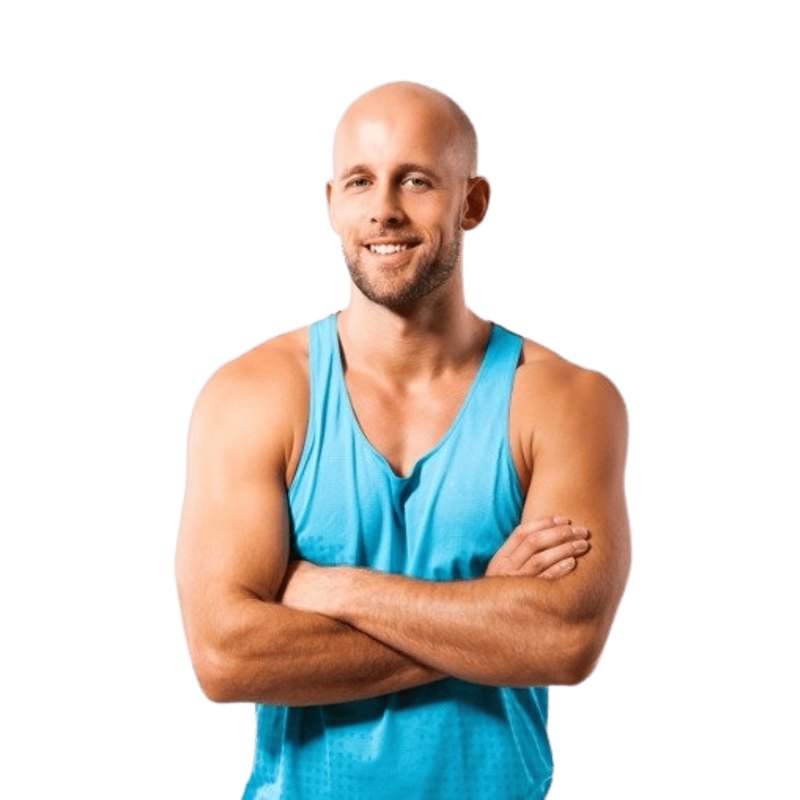
I've had a cold shower every morning for years. This is the routine I use myself, and it's how I build it up with my personal training clients.
How I became a cold-shower person
Whenever I talk about cold showers, most people say: "Oh God, I'd never do that. You're mad." I get it, because that used to be me. I simply couldn't handle the cold.
About ten years ago, after my son was born, we moved from Prenzlauer Berg to the north of Berlin. Bigger flat, more nature, and underfloor heating on both floors. We had it on all the time because it was just so cosy, and bit by bit, all of us went soft. Guests sat on our sofa in their underwear and still complained they were sweating. Visiting kids: drenched, every one of them. We padded around in shorts all winter.
The trouble started the moment I went outside. I froze, my feet were always icy, and I constantly felt like I was coming down with something. I had the heated seats on in the car, and at some point I caught myself searching online for thermal leggings while my mates were out in ordinary jeans. I was a total wimp. My daily life was set up so that my body never had to deal with heat or cold any more, and it had forgotten how.
That's when it clicked: you don't beat the cold with more coats. So I started taking cold showers. I tell the whole story in Cold Showers — my personal game changer.
What challenges your body in the short term makes it stronger in the long term. A cold shower is unpleasant for a moment. Do it regularly, with water that's cold enough, and you become more resilient, to the point where you can walk around outside at six degrees without feeling cold.
The principle: don't go from zero to a hundred
In the gym, you wouldn't load 100 kilos on the bench press when your limit is 40; you'd end up at the doctor's. You work your way up to the weight you can handle, and you keep getting stronger. Cold showers work the same way. You don't start with four-degree water for ten minutes. The skill is to build up gradually, so your body gets the chance to adapt. It's the same pattern as in The Resistance Principle.
I didn't put my whole body under the cold water on day one either. I started with my arms and lower legs, then worked my way up, and built it up over several weeks. That's where the routine below comes from.
My routine: six weeks, step by step
Always in the morning, straight after you get up. And one thing applies every week: let the water run until it's properly cold, cold enough to tingle. Lukewarm water just feels unpleasant and does nothing for you. The colder, the better.
Cold water on your face
Do it at the sink and take your time. Then dry off and moisturise. That's all for the first week, and it's plenty.
Face and forearms
Still at the sink, so nice and simple. The key: let the water run until it's really cold, otherwise it won't do much.
Add your lower legs
Face and forearms first, then your lower legs in the shower or the bath. This is when you'll really start to notice you're more awake and alert in the mornings.
Arms and legs in the shower
Face at the sink first, then into the shower. Rinse your arms and legs one after the other, always moving from your hands and feet towards your body, so you start far from your heart and work towards it:
- Right arm: hand up to shoulder
- Right leg: foot upwards
- Left arm: hand up to shoulder
- Left leg: foot upwards
That way your circulation gets the cold bit by bit rather than all at once.
Stay under longer
Same order, now around 30 seconds to a minute per arm and leg, depending on how cold the water is. The colder, the better.
Bring in your torso
After your arms and legs, work your way up your body: hips, belly, chest, back, as far as you can go. This is the big one. And afterwards you get a proper rush of warmth, because your body is now actively producing heat.
Keep it going
Now it's your routine. If you want, go colder or longer. What counts is doing it every morning, not setting records.
Afterwards: dry off. If your skin tends to get dry, moisturise, ideally with a natural body lotion that keeps the additives to a minimum.
And under the water: keep breathing calmly. Your first reflex is to gasp. Breathe out slowly and steadily instead. You'll find out how to steer your nervous system with your breath in Breathing — the switch to your nervous system.
Your checklist
Pick your week, then tick off your three items every morning. The list remembers your ticks on this device and resets every day. Tip: add the page to your home screen.
Short on time or not your day? The short version counts: cold water on your face at the sink, ten seconds.
Yellow means all three done. Your ticks stay in your browser and are never sent anywhere.
Moving afterwards is part of it
Unless I move afterwards, I don't properly warm up again, and the same goes for some of my clients. Sitting down or standing around isn't a good idea. Get your body going until you warm up on your own, for example with:
- a brisk morning walk, ideally outside in daylight
- a short follow-along mobility routine: the Mobility Flow (2–3 minutes) or the calmer Easy Mobility Flow (about 5 minutes)
- a quick bit of movement, like going up and down the stairs ten times
- or heading straight out for your morning run
Here's what I do: after my cold shower I go out onto the terrace and get properly moving for a few minutes in the morning sun. In autumn I look for the brightest spot around the house. Then I go back in and have breakfast. That way cold, movement and daylight all come together in one go. You can read why morning light makes such a difference in In Sync with the Sun.
Sticking with it: turning it into a habit
This isn't about one heroic shower. It's about building a regular routine, in other words a habit. And one thing matters more than anything else: keep the chain going. Especially at the start, but really, always.
Even on days when you can't manage the full version, do at least the smallest one. Cold water on your face at the sink, ten seconds. That counts. The habit stays intact, and on the next good day you're back to your week.
Here's what keeps a habit going, as I see again and again in myself and my clients:
- A fixed trigger. Straight after you get up, always the same bathroom, always the same order. Then there's nothing to decide each morning, you just do it. How your cold shower gets a fixed slot in your morning is covered in The Daily Structure.
- Start small. That's exactly what the routine is for. Start with your face and you'll be back tomorrow. Start with an ice-cold full-body shower and often you won't.
- Know your inner voice. "Today really isn't a good day for it…" That voice turns up almost every morning, mine included. Once you know it, you can answer it with the short version.
- A small piece of proof every time. Every cold shower tells you: I'm someone who does this. With every repetition, that becomes more a part of who you are.
- See your progress. That's why the checklist above shows your streak. Yellow dots are motivating.
People who repeated the same new action every day in the same setting, after breakfast for example, found it had become largely automatic after a median of 66 days, though this varied widely, from 18 to over 250 days. Missing a single day didn't set the process back. Those who were very inconsistent, however, didn't form a habit. Who was studied: 96 volunteers, mostly students, average age 27, with simple everyday habits like eating fruit or going for a run, over 12 weeks. What this means for you: the principle applies to working adults too. The six weeks are your build-up; it often only becomes a fixed habit after that. And if you do miss a day, just carry on the next morning.
Lally P, van Jaarsveld CHM, Potts HWW, Wardle J (2010). How are habits formed: Modelling habit formation in the real world. European Journal of Social Psychology 40(6):998–1009. DOI: 10.1002/ejsp.674 · Real-world observational study
When to take a break
There's one clear exception: when you're ill. If you've got a cold or a fever, skip the cold shower, because your body needs its energy for fighting the infection, not for an extra cold stimulus. Once you're fully well again, pick it back up, ideally with a slightly easier week. In the checklist, mark those days as "Ill today" and your streak stays where it is.
In my experience this happens less often once the routine is established. And if your throat does start to feel scratchy, A cold coming on tells you what you can do straight away.
What happens in your body
When cold water hits your skin, cold receptors just below the surface sound the alarm. The blood vessels in your skin narrow, your heart rate and breathing go up, and your body releases noradrenaline, a chemical messenger that makes you alert and focused. This first reaction is called the cold shock response. How strong it is depends on how fast your skin cools and how much of it gets cold at once. That's exactly why you start small, with your hands and feet.
The cold shock response is triggered by cold receptors in the skin, and the faster the skin cools and the larger the area exposed, the stronger it is. What this means for you: the principle applies to everyone. It was studied with people getting into cold water, so a shower is a much smaller stimulus.
Tipton MJ (1989). The initial responses to cold-water immersion in man. Clinical Science 77(6):581–588. DOI: 10.1042/cs0770581 · Review
Here's the interesting part: this reaction gets smaller every time. Your body learns that the cold isn't a threat. Next time, your heart rate and breathing don't shoot up as much, and you stay calmer. That's what cold conditioning is all about.
After just six extra short cold-water dips (3 minutes each at 10 °C), heart rate and breathing reacted far less on the next immersion than in the control group. Who was studied: 15 healthy young adults (aged 18–32) with no cold experience, in a lab. What this means for you: the general effect carries over to working adults, though the exact numbers don't, and they were getting into water rather than showering.
Tipton MJ, Eglin CM, Golden FSC (1998). Habituation of the initial responses to cold water immersion in humans. Journal of Physiology 512(2):621–628. DOI: 10.1111/j.1469-7793.1998.621be.x · Small controlled lab study
Over time, the way your body manages heat adapts too. It produces more warmth using brown fat, a special kind of fat tissue that turns energy straight into heat instead of storing it. You know the result from my story: you don't feel the cold as quickly outside, and cold starts to feel more comfortable.
After ten days of spending several hours a day in a room at 15–16 °C, participants' brown fat was more active, they rated the room as warmer, felt more comfortable in the cold and shivered less. Who was studied: 17 young, lean, healthy adults (9 women, 8 men, average age 23). What this means for you: it shows the body does get used to the cold. The stimulus was different from a cold shower, though, and older adults weren't included.
van der Lans AAJJ et al. (2013). Cold acclimation recruits human brown fat and increases nonshivering thermogenesis. Journal of Clinical Investigation 123(8):3395–3403. DOI: 10.1172/JCI68993 · Intervention study without a control group
So how does that play out in everyday life? There's one study that's a close match for you: working adults finished their warm shower with cold water every morning for a month.
People who ended their morning shower with 30 to 90 seconds of cold water for 30 days called in sick less often on average. The number of days they actually felt ill, however, was no different from the control group. Who was studied: around 3,000 working adults in the Netherlands with no cold experience, randomised. What this means for you: this is the group closest to your own daily life, and it's also the largest cold-shower study there is.
Buijze GA et al. (2016). The Effect of Cold Showering on Health and Work: A Randomized Controlled Trial. PLOS ONE 11(9):e0161749. DOI: 10.1371/journal.pone.0161749 · Randomised controlled trial
My take as a sports scientist: the best-supported effects are getting used to the cold, feeling more awake in the morning and a better mood. Everything else, such as effects on the immune system, is plausible and partly supported, but not settled yet. There's more on the research in the cold exposure lesson.
Why start on the right and work inwards?
The order comes from the Kneipp method of hydrotherapy: cold affusions start on the right-hand side and far from the heart, at the hands and feet, and are then guided towards the heart. Arms and legs first, torso last. That way the load on your circulation builds up gradually. It's a long-established rule of thumb from hydrotherapy rather than something a study has settled. What matters is the principle behind it: start small, start at the edges, torso last.
Can I do it after a warm shower?
That's the question I get asked most. The answer is yes. You can also flip it round: go for a run or train first, then have a warm shower and finish cold.
For me, though, it works best straight out of bed. That's when it takes the most willpower and the contrast with your warm, cosy bed is strongest. Get over it, and you feel fantastic afterwards.
One exception: if you're trying to build muscle, don't take a long ice bath straight after your strength session. It can slow down your body's adaptation to the training. A quick cold rinse at the end of a shower is a different matter, but save the ice bath for another time of day, such as the morning.
People who sat in 10 °C water for ten minutes after every strength session for twelve weeks gained less strength and muscle than a group who did an active cool-down on a bike. Who was studied: 21 physically active young men training twice a week. What this means for you: the training volume is a good match for two to four hours a week. What was tested was an ice bath, not a short cold shower.
Roberts LA et al. (2015). Post-exercise cold water immersion attenuates acute anabolic signalling and long-term adaptations in muscle to strength training. Journal of Physiology 593(18):4285–4301. DOI: 10.1113/JP270570 · Controlled training study
Already doing ice baths or open water?
Then you don't necessarily need my shower routine. If you head for the plunge pool after the sauna, own an ice tub or go into a cold lake every day, you're already doing what this is all about. My routine is for anyone who isn't doing any of that yet. And it's good preparation if you'd like to give one of those a go before long.
If you've got a lake or the sea close by, just go in every day, even as autumn sets in. You'll get used to the falling temperatures automatically, and your body adapts along with them. Never swim alone, stay close to the shore and keep your head above water for the first few moments.
The classic switch between heat and cold. Same rule here: legs first, then lower yourself in slowly and keep breathing calmly.
The strongest stimulus of the three. Short sessions are enough, a couple of minutes will do. If you've prepared with my routine, you'll find getting in much easier.
Sadly I don't have a lake or the sea on my doorstep. So for me it's tap water or an ice tub. Then again, in winter Berlin's tap water is a pretty decent stimulus on its own.
A few ground rules
- Check with your doctor first if you have heart or circulation problems, high blood pressure, an irregular heartbeat or a circulation disorder such as Raynaud's, if you're pregnant, or if you're not sure.
- Not when you have a cold or a fever. Take a break and start again once you're fully well.
- Only put cold on warm skin. If you're already shivering, warm up first. That's a basic rule of the Kneipp method.
- Keep breathing exercises away from water. Intense breathing cycles like the Wim Hof method should never be done in or near water.
- Listen to your body. A brief sting of cold on your skin is normal. If you feel dizzy or unwell, stop.
Where to go next
- Cold Showers — my personal game changer: my full story and the research
- Mobility Flow: the follow-along routine for after your cold shower
- In Sync with the Sun: why morning light kick-starts your day
- The Daily Structure: how your cold shower gets a fixed slot in your morning
- Supplement Compass: including vitamin D for the darker months
- A cold coming on: what to do when your throat starts to feel scratchy
Want to take it further?
You can start this routine on your own today. If you'd like to reshape your daily life, your training and your health under my guidance for a while, there are three ways to work with me.
My coaching: training, nutrition and lifestyle in one place
We start with an assessment, I look at where you are right now, and build your plan from there. Personal training at the studio, coaching for the sessions you do on your own, and your Daily Structure, week by week.
Book a trial sessionOnline coaching with the Thrive Zone App
Your routines are built into your day, along with your training plan and demo videos for every exercise. I can see what you're doing and tailor your coaching to it.
Message me "App"Mobility workshop on Saturday, 12 December
Two hours in a small group: learn the mobility routine that goes perfectly with your morning cold shower, with individual corrections for everyone.
See the workshopStay in the loop with the newsletter
A new lesson every two weeks, and newsletter readers hear about workshop dates first.
Join the newsletterSources
Tipton MJ (1989). The initial responses to cold-water immersion in man. Clinical Science 77(6):581–588. DOI: 10.1042/cs0770581 — review (cold shock response depends on rate of skin cooling and area exposed)
Tipton MJ, Eglin CM, Golden FSC (1998). Journal of Physiology 512(2):621–628. DOI: 10.1111/j.1469-7793.1998.621be.x — controlled lab study, 15 healthy adults aged 18–32 (habituation of the cold shock response)
van der Lans AAJJ et al. (2013). Journal of Clinical Investigation 123(8):3395–3403. DOI: 10.1172/JCI68993 — intervention study, 17 young lean adults, 10 days at 15–16 °C (brown fat, thermal comfort)
Buijze GA et al. (2016). PLOS ONE 11(9):e0161749. DOI: 10.1371/journal.pone.0161749 — randomised controlled trial, around 3,000 working adults (fewer sick days taken, same number of days ill)
Roberts LA et al. (2015). Journal of Physiology 593(18):4285–4301. DOI: 10.1113/JP270570 — controlled training study, 21 active young men, 12 weeks (ice bath after strength training)
Ortiz M et al. (2023). Clinical effects of Kneipp hydrotherapy: a systematic review of randomised controlled trials. BMJ Open 13(7):e070951. DOI: 10.1136/bmjopen-2022-070951 — systematic review, 20 RCTs, patients and healthy volunteers of all ages (Kneipp therapy overall, mixed evidence)
Lally P, van Jaarsveld CHM, Potts HWW, Wardle J (2010). European Journal of Social Psychology 40(6):998–1009. DOI: 10.1002/ejsp.674 — observational study, 96 volunteers, mostly students (habit formation, median 66 days, one missed day had no effect)
Order of affusions (start on the right, from far to near the heart, torso last) and "only put cold on warm skin": basic rules of Kneipp hydrotherapy as taught in physical therapy, e.g. Altmeyers Enzyklopädie, entry "Güsse (Kneipp)". A rule of thumb from practice, not a study finding. The six-week routine is Andreas's own model, based on personal experience and his work with clients.