Lowering cholesterol naturally
Few numbers on a blood test get talked about this much and understood this little. This lesson ranks every natural lever by two things: how far it moves the number, and how well it survives a real week. Plus a yardstick for what those numbers are actually worth.
"Your cholesterol is too high." You hear it at a routine check-up, and then almost everyone does the same thing. Eggs out. Butter swapped for margarine. A bag of oats in the cupboard. Some capsule ordered online. A few of those moves work. Most barely register. And one or two things nobody thinks about turn out to matter quite a lot.
The frame behind it: your cholesterol number doesn't kill you — the plaque in your artery wall does. Why LDL is nevertheless the necessary condition for it, what inflammation genuinely contributes, and what protects the wall: that's Lesson 35. This lesson gives you the levers.
It sorts things out in three questions. What are we actually trying to change? How far does each lever move it, in real numbers? And what do you do about it tomorrow morning?
Your body doesn't ask how you lowered your LDL. It responds to how much and for how long. If a change in diet lowers your LDL by as much as a drug does, it buys you the same benefit. That has been measured, not assumed. The only real difference is the size of the drop — which is exactly why it pays to know what each lever is worth.
Part 1: What actually matters
Cholesterol isn't the enemy. It's raw material.
Cholesterol sits in every cell membrane you own. Your body makes testosterone, oestrogen and cortisol from it. Your liver turns it into bile acids, without which you couldn't digest fat at all. And UVB light turns a cholesterol precursor in your skin into vitamin D. Take cholesterol away and there is no you.
So your body doesn't leave the supply to chance — it makes most of it itself. Roughly 700 to 900 milligrams a day, in-house, compared with the 300 to 500 milligrams that typically arrive on a plate. Those figures come from review papers, so treat them as ballpark rather than precise. But the ratio holds: your own production is the main tap, and food is barely a trickle beside it. The two are also linked. Eat more, and the liver throttles back — not completely, but noticeably.
The problem isn't the cholesterol. It's the delivery van.
Cholesterol is a lipid and doesn't dissolve in blood, so your body packs it into transport particles called lipoproteins. The ones that matter:
- LDL carries cholesterol from the liver out into the body. It's the delivery van.
- HDL picks up what's left over and brings it back. It's the collection van.
- VLDL mostly carries triglycerides, and turns into LDL along the way.
And here's the point everything else hangs on. It's the LDL particles that lodge in the artery wall. The more of them there are, and the longer they stay in circulation, the more get stuck. This isn't an association or a statistical quirk. It's a proven cause-and-effect relationship.
The European Atherosclerosis Society pulled together three independent lines of evidence: more than 200 observational studies, genetic studies (Mendelian randomisation), and randomised drug trials. Together they cover over 2 million people and more than 150,000 events, and all three converge on the same effect. In their own words, the evidence "unequivocally establishes that LDL causes ASCVD". And it depends on dose and on time. What counts isn't only how high your LDL is, but how long it has been high.
Ference BA et al. (2017). European Heart Journal 38(32):2459–2472. DOI: 10.1093/eurheartj/ehx144 · Consensus statement synthesising genetics, epidemiology and RCTs. The causal claim rests on random genetic assignment and randomised trials landing independently on the same effect.
That also explains why a high reading at 30 is more dangerous than the same one at 60. The exposure accumulates. Lower it early and you lower it for longer.
ApoB — the test your doctor rarely orders, and the one that tells you most
LDL cholesterol measures how much cholesterol is riding inside your LDL particles. But particles are loaded unevenly. Some are packed, some half empty. What gets trapped in the artery wall isn't the cargo — it's the particle. And every single atherogenic particle carries exactly one ApoB molecule on its surface. So ApoB counts the particles.
An analysis of nearly 390,000 people from the UK Biobank, plus two large drug trials, ran ApoB, non-HDL cholesterol, LDL cholesterol and triglycerides in the same model. Once ApoB was in there, only ApoB stayed significantly linked to heart attacks — HR 1.27 per standard deviation in primary prevention (1.17 and borderline in secondary prevention). The other markers lost their independent signal.
Marston NA et al. (2022). JAMA Cardiology 7(3):250–256. DOI: 10.1001/jamacardio.2021.5083 · Prospective cohort (n = 389,529) plus two trial cohorts (n = 40,430). Observational data alongside trial data — highly consistent, though the causal claim itself comes from the genetics (Ference 2017).
What that means for you: if you're having bloods done anyway, add ApoB. It's cheap, it doesn't need fasting, and it tells you more than LDL alone. The European guideline recommends it outright, particularly if you have raised triglycerides, diabetes, excess weight or metabolic syndrome.
"Good cholesterol" — why the picture doesn't hold
HDL is the good one, so the story goes. The logic seems sound: HDL clears cholesterol away, so more must be better. Observational studies back it up — people with high HDL have fewer heart attacks. The question has been properly tested twice, and both times the result went the other way.
Test one: the genes. If the observational data were right, people who carry a variant that raises HDL for life should have around 13% fewer heart attacks. What was measured: OR 0.99. Nothing at all. The same study ran an LDL score as a control and got OR 2.13. LDL holds up. HDL doesn't.
Test two: the drugs. Torcetrapib raised HDL by 72% — and raised mortality along with it (HR 1.58). The trial was stopped. Dalcetrapib: HDL up 31–40%, no benefit. Evacetrapib: HDL up 133%, no benefit. Three drugs, three failures.
Voight BF et al. (2012). Lancet 380(9841):572–580. DOI: 10.1016/S0140-6736(12)60312-2 · Mendelian randomisation. — ILLUMINATE: Barter PJ et al. (2007). NEJM 357:2109. DOI · dal-OUTCOMES: Schwartz GG et al. (2012). NEJM 367:2089. DOI · ACCELERATE: Lincoff AM et al. (2017). NEJM 376:1933. DOI · all RCTs.
There's one telling exception. Anacetrapib raised HDL by 104% and cut non-HDL cholesterol by 18% — and it worked (RR 0.91). The obvious reading is that the benefit came from clearing ApoB-carrying particles, not from the HDL rise. That's an interpretation of the authors' data rather than a claim the paper makes. But it fits everything else we know.
HPS3/TIMI55-REVEAL Collaborative Group (2017). NEJM 377(13):1217–1227. DOI: 10.1056/NEJMoa1706444 · RCT (n = 30,449). REVEAL deliberately reports non-HDL cholesterol rather than LDL.
The clean read: HDL is a readout, not a lever. A low HDL tells you something metabolic is off — usually not enough exercise, too much visceral fat, triglycerides running high. But you gain nothing by pushing the HDL number up on its own. Fix the cause and the number follows. It doesn't work the other way round.
Triglycerides — quick to respond, easy to misread
Triglycerides react to your habits faster than any other blood lipid. Less sugar, less alcohol, a few kilos down, walking regularly, and the number often drops within weeks. As an early-warning system for your metabolism, they're excellent.
But lowering the triglyceride number doesn't automatically lower your risk. That lesson was learned the expensive way.
In a trial of 10,497 patients, the drug pemafibrate cut triglycerides by 26% and remnant cholesterol by 26%, exactly as designed. But the ApoB particle count rose by 4.8%. The outcome after years of follow-up: HR 1.03. Not a single event prevented.
Das Pradhan A et al. (2022), PROMINENT. NEJM 387(21):1923–1934. DOI: 10.1056/NEJMoa2210645 · RCT (n = 10,497). The genetics say the same thing: triglyceride-lowering and LDL-lowering variants protect to exactly the same degree — per ApoB particle removed (Ference BA et al. 2019, JAMA 321(4):364–373, DOI, Mendelian randomisation, n = 654,783).
The compass keeps pointing the same way. Particle count is what matters. Triglycerides tell you how your metabolism is doing, but the causal lever is still ApoB.
Lp(a) — the number you can't eat your way out of
There's a class of LDL particle that carries an extra protein tail: lipoprotein(a). It's unusually atherogenic, and it's more than 90% genetically determined. Your adult level is essentially set by the time you're five. Roughly one in five people sits in the range that matters.
The European Atherosclerosis Society consensus paper puts it plainly: "Lifestyle interventions have minimal impact." And here's the part that stings. The very change that lowers your LDL — cutting saturated fat — raises Lp(a) by roughly 10 to 15%. Statins don't touch it either: LDL down 39%, Lp(a) unchanged.
Kronenberg F et al. (2022). European Heart Journal 43(39):3925–3946. DOI: 10.1093/eurheartj/ehac361 · EAS consensus statement. — Willeit P et al. (2018). Lancet 392:1311–1320. DOI · Individual-patient meta-analysis of 7 statin trials (n = 29,069).
So what do you do with it? Get Lp(a) measured once in your life. The guideline advises it — class IIa, meaning "should be considered" rather than the strongest recommendation, but it's worth knowing. If it comes back high, you won't lower it through food. You compensate. You get stricter than someone with a low Lp(a) needs to be, on LDL, on blood pressure, on smoking. That's the only lever you hold, and it's a real one. Drugs targeting Lp(a) directly are in development, but whether they prevent events is still unproven.
And what about eggs?
Two extreme claims circulate here, and neither survives contact with the data. Not "eggs send your cholesterol through the roof", and not "dietary cholesterol has nothing to do with blood cholesterol".
A meta-regression across 55 randomised trials shows that for every 100 mg of extra dietary cholesterol, LDL rises by roughly 2 to 4.5 mg/dL, depending on the model. And the relationship flattens out: at low intakes the body responds more; at high intakes it compensates. One egg has about 190 mg. The effect is real. It's also small.
Vincent MJ et al. (2019). American Journal of Clinical Nutrition 109(1):7–16. DOI: 10.1093/ajcn/nqy273 · Bayesian meta-regression, 55 RCTs (n = 2,652). Full disclosure: the work was funded by the Egg Nutrition Center / American Egg Board. The numbers hold up — but the fact that they show a small effect is worth reading with that in mind.
And the events that actually matter? Up to about one egg a day, large cohorts show no rise in heart-attack risk (RR 0.99). With one exception: in the same analysis, people with diabetes in the highest egg-intake group carried a markedly higher risk (RR 1.54). That's observational data, so it shows an association rather than proof. But it's the reason the answer differs for someone with diabetes and someone without.
Here's what's actually going on: the cholesterol in the egg is a trickle. The main tap is the saturated fat on your plate — butter, sausages, cream, cheese, fatty meat. Arguing about the egg while ignoring the sausage is turning the wrong tap. And individual responses vary a lot; hyper-responders and hypo-responders both exist. Which is why the rule here is the rule everywhere: measure, don't guess.
Your target — and how to work out which one is yours
There is no single target. There's yours, and it doesn't hang on your cholesterol — it hangs on your overall risk. Two people with an identical LDL of 140 can have completely different targets. One is healthy and sitting comfortably; the other has had a heart attack and is nowhere near where he needs to be.
The logic is simple. The more your arteries already have to put up with, the less LDL they can afford on top. So the European guideline sorts people into four tiers, from "healthy and unremarkable" to "already has the disease".
Before you read the table — the short version: if you're healthy, don't smoke, have normal blood pressure, no diabetes and no early heart attacks in the family, you land in "low" or "moderate" nearly every time. Your target is then somewhere under 100 to 116 mg/dL. You only reach the top two tiers through a diagnosis — never through a high cholesterol reading on its own.
| Tier | Who lands here | Your LDL target |
|---|---|---|
| Very high | You already have vascular disease (heart attack, stroke, narrowed coronary arteries, a stent, a bypass) · diabetes with organ damage · severe kidney disease | under 55 mg/dL (1.4 mmol/L) and halve it at least → |
| High | Familial hypercholesterolaemia (the inherited form) · a baseline LDL above 190 mg/dL · blood pressure at or above 180/110 · moderate kidney disease · diabetes without organ damage | under 70 mg/dL (1.8 mmol/L) and halve it at least → |
| Moderate | You have risk factors but no diagnosis — smoking, extra weight, high blood pressure, too little exercise, heart attacks in the family. Most people past 40 with one or two of these land here | under 100 mg/dL (2.6 mmol/L) |
| Low | Healthy, no risk factors. Non-smoker, normal blood pressure, no diabetes, nothing inherited | under 116 mg/dL (3.0 mmol/L) |
"And halve it at least" — what that actually means: in the top two tiers, hitting the target number isn't enough on its own. You also have to bring your LDL down by at least half from where it started, and the stricter of the two conditions is the one that counts. Say your baseline is 200 and you're in the "high" tier: the target of under 70 would be met at 69, while halving demands 100. So the binding number is 70. Now flip it — baseline 100: under 70 would be met at 69, but halving demands 50, so the binding number is 50. Always the harder of the two.
Secondary targets (if your lab reports them): ApoB under 65 / 80 / 100 mg/dL, and non-HDL cholesterol under 85 / 100 / 130 mg/dL — for very high / high / moderate risk respectively.
One caveat: which tier you fall into is your doctor's call. It comes from a risk score (SCORE2) that weighs age, sex, blood pressure, smoking and cholesterol together. The table above orients you; it isn't a self-test. Source: ESC/EAS dyslipidaemia guideline (Mach F et al. 2020, Eur Heart J 41(1):111–188, DOI), targets confirmed in the 2025 focused update.
What to ask for when you get your bloods done: the full lipid panel (total cholesterol, LDL, HDL, triglycerides), and you no longer need to fast for it. Add ApoB, and once in your life, Lp(a). That's the complete set. Non-HDL comes free — total cholesterol minus HDL, done.
The yardstick: what an LDL drop is worth
Before the ranking, you need an exchange rate. Otherwise "minus 10 mg/dL" means nothing to you. There is one, and it's among the best-established numbers in medicine.
The Cholesterol Treatment Trialists' Collaboration pooled individual data from 170,000 people across 26 randomised trials. For every 1 mmol/L (roughly 39 mg/dL) that LDL comes down, the risk of a major vascular event falls by 22% per year (RR 0.78), and all-cause mortality by 10%. Within the range studied there was no floor where the benefit ran out — even below 2 mmol/L LDL, lowering it further still paid off. And a follow-up analysis by the same group found the relative reduction is at least as large in people at low baseline risk as in those at high risk.
Cholesterol Treatment Trialists' Collaboration (Baigent C et al., 2010). Lancet 376(9753):1670–1681. DOI: 10.1016/S0140-6736(10)61350-5 · Individual-participant meta-analysis, 26 RCTs. Low baseline risk: CTT Collaborators (Mihaylova B et al., 2012). Lancet 380(9841):581–590. DOI. The ESC/EAS guideline uses a more conservative figure of about 20%, so 20 to 22% is the range worth quoting.
And now the sentence this whole lesson rests on.
A meta-analysis of 49 randomised trials covering 312,175 people asked whether it matters how the LDL came down. Statins: risk reduction of RR 0.77 per mmol/L. Non-drug routes working through the same mechanism — diet explicitly among them — came in at RR 0.75. The difference between the two groups: p = 0.72. No difference.
Silverman MG, Ference BA et al. (2016). JAMA 316(12):1289–1297. DOI: 10.1001/jama.2016.13985 · Systematic review and meta-analysis, 49 RCTs (n = 312,175, 39,645 events). There's one condition attached: this holds as long as the LDL reduction reflects a genuine drop in particle count, and no off-target harm cancels it out. That is precisely where the HDL drugs came apart.
A statin lowers far more, of course. Thirty to fifty per cent, whereas a change in diet you actually stick to delivers ten to fifteen. That gap is real. But per milligram removed, the benefit is identical. And the levers below stack.
Your rule of thumb for everything that follows: roughly 39 mg/dL less LDL ≈ 20–22% fewer cardiovascular events per year. So ten milligrams is worth about 5–6%, every year, for as long as you hold it. That's the currency we're counting in from here on.
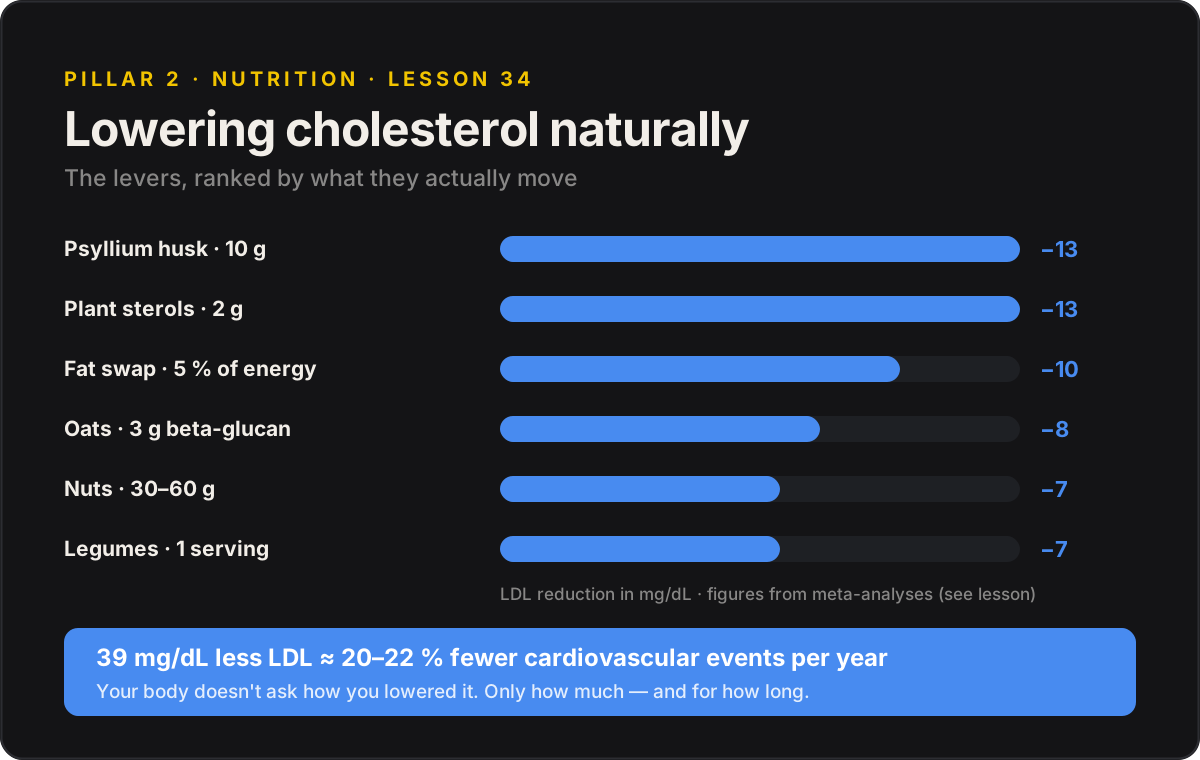
Part 2: The ranking — what's worth what
Sorted by what counts: how far a lever moves the number, multiplied by how well it survives a real week. A lever that's powerful in theory but never actually happens is worth nothing. A small lever you pull effortlessly for twenty years is gold. Tap any lever for the details and the source.
Biggest effect, solid evidence, workable in real life. If you only change three things, make them three from this list.
The portfolio principle all the dietary levers at once, not one at a time−13%+
This is the strongest finding in the field, and it isn't a single intervention. It's the principle of stacking. Nuts, plant protein, viscous fibre and plant sterols, all of them, every day. Each lever on its own is modest. Together, in a real-world trial, LDL fell by 13% — from a baseline of 171 mg/dL, that's around 24 mg/dL.
The arithmetic worth doing: the control group also lost 3% over the same period. What you can genuinely credit to the portfolio diet is therefore around 10 percentage points — roughly 17 mg/dL, which by the CTT rule works out at about 10% fewer cardiovascular events a year. That's the figure to plan with, not the 13.
The remarkable part of the trial: the group given just two counselling sessions over six months did essentially as well as the group given seven (−13.1% vs −13.8%). This doesn't need intensive supervision. It needs the principle, and it needs you to actually do it.
Jenkins DJA et al. (2011). JAMA 306(8):831–839. DOI: 10.1001/jama.2011.1202 · Randomised trial, 6 months, self-selected food. In tightly controlled feeding studies you can reach −17% (Chiavaroli L et al. 2018, Prog Cardiovasc Dis 61(1):43–53, DOI, GRADE high) — but the control-adjusted figure is what belongs in a plan.
Swap saturated fat for unsaturated butter, sausage, cream → olive oil, rapeseed oil, nuts, oily fish−10 mg/dL+
The biggest single lever on your plate, and the most underrated. And it isn't about cutting fat out — it's about swapping it. The calories stay. The quality changes.
The arithmetic is well mapped. For every 1% of energy you shift from saturated to polyunsaturated fat, LDL drops 2.1 mg/dL. Five per cent of energy is a realistic shift: butter on your toast traded for avocado or nut butter, cooking fat moved from ghee to rapeseed oil, sausages traded for fish. That comes to roughly −10 mg/dL.
And this lever is one of the few with outcome evidence behind it. Cutting saturated fat for at least two years reduced cardiovascular events by 17% — twelve trials, 53,758 participants in the endpoint pool (the full review covers fifteen trials and 56,675 people). The meta-regression shows exactly the pattern you'd expect if the mechanism is real: the more cholesterol came down, the more events came down. Worth noting, though: there was no significant effect on all-cause mortality.
Effect size: Mensink RP (2016), WHO report, WHO IRIS · systematic review and regression, 84 studies. The 5%-of-energy figure is a model calculation built on that verified coefficient. — Outcomes: Hooper L et al. (2020). Cochrane Database Syst Rev 8:CD011737.pub3. DOI · RR 0.83 (0.70–0.98), 12 trials / 53,758 participants, GRADE moderate, NNT 56 in primary prevention (53 in secondary) over roughly 4 years.
Viscous fibre: oats & psyllium 3 g beta-glucan plus 10 g psyllium husk daily−13 to −23 mg/dL+
Viscous fibre binds bile acids in the gut. The liver has to make replacements, and it pulls the raw material out of the LDL in your blood. That's exactly what the bile-acid sequestrants do as drugs — and it lands the liver in the same place ezetimibe does by a different route: pulling more LDL out of the blood. This isn't a wellness effect. It's biochemistry.
Oats: from 3 g of beta-glucan a day (about 70–80 g of oats), LDL drops 7 to 10 mg/dL. Going higher adds nothing anyone has been able to measure; the effect plateaus. One bowl of porridge or overnight oats covers it.
Psyllium husk: the strongest single fibre there is. Around 10 g a day, or two heaped teaspoons, brings LDL down 13 mg/dL — and, more to the point, brings ApoB down with it (−0.05 g/L, GRADE high). That's the largest proven ApoB effect of any fibre. Beta-glucan lowers ApoB too, just less (−0.03 g/L).
⚠ Important with psyllium: always take it with plenty of fluid — at least a large glass of water per serving, and keep drinking through the day. Psyllium swells considerably, and taken with too little fluid it has caused documented cases of oesophageal and bowel obstruction. So if you're stirring it into yoghurt or muesli, drink a glass of water alongside it. And leave one to two hours between psyllium and any medication, because it can interfere with absorption. If you have swallowing difficulties or a known narrowing of the bowel, check with your doctor first.
Oats: Ho HVT et al. (2016). Br J Nutr 116(8):1369–1382. DOI · 58 RCTs. Whitehead A et al. (2014). Am J Clin Nutr 100(6):1413–1421. DOI · 28 RCTs. — Psyllium: Jovanovski E et al. (2018). Am J Clin Nutr 108(5):922–932. DOI · 28 RCTs (n = 1,924), median 10.2 g/day.
Nuts 30–60 g a day — the type doesn't matter−5 to −10 mg/dL+
One serving (28 g) a day lowers LDL by 4.8 mg/dL and ApoB by 3.7 mg/dL. Above 60 g a day the effect gets noticeably stronger — the curve isn't linear — it accelerates.
And the finding that simplifies the choice: what matters is how much you eat, not which kind. Almonds, walnuts, hazelnuts, pistachios — take whichever you'll actually eat. Just unsalted, and not roasted in sugar.
Del Gobbo LC et al. (2015). Am J Clin Nutr 102(6):1347–1356. DOI · Meta-analysis and dose-response analysis, 61 controlled trials (n = 2,582).
Lose weight — if you have weight to lose per kilo: −0.8 mg/dL LDL and −1.3 mg/dL triglycerides−8 mg/dL / 10 kg+
Ten kilos down works out at roughly 8 mg/dL less LDL and triglycerides 13 mg/dL lower. As a pure LDL lever the effect is moderate. The real payoff sits elsewhere: insulin sensitivity, blood pressure, visceral fat, inflammation — all of it improves.
One detail that would otherwise throw you: while you're actively losing, your HDL falls. It only climbs once your weight has stabilised (+0.35 mg/dL per kilo lost). So if a blood test taken mid-diet looks worse, that's expected. You measured too early.
Dattilo AM, Kris-Etherton PM (1992). Am J Clin Nutr 56(2):320–328. DOI · Meta-analysis, 70 studies. Conversion from mmol/L to mg/dL is mine.
Proven, but either smaller or with a caveat attached. Stacked on top of Tier 1, they take you over the line.
Plant sterols around 2 g daily — via fortified products or a supplement−13 mg/dL+
Plant sterols resemble cholesterol closely enough to take its parking spaces in the gut. Around 2.15 g a day lowers LDL by 8.8% — from a baseline of 150 mg/dL, that's roughly 13 mg/dL. It's the most thoroughly dose-mapped effect in the whole field (84 randomised trials). Note that it's a percentage effect: the higher your starting number, the more milligrams come off.
It's also the only cholesterol lever with an approved EU disease-risk-reduction claim, and that claim is tiered: 1.5–2.4 g a day → 7–10%, and 2.5–3 g a day → 10–12.5%, with the effect appearing within two to three weeks. That's written into a regulation, not a marketing leaflet.
The catch: ordinary food won't get you to 2 g. You need fortified products or a supplement. And this matters — no trial has ever shown plant sterols to prevent heart attacks directly. What's proven is the LDL reduction; the benefit is inferred from the LDL rule rather than measured. Spread the dose across meals, and solid foods beat drinks. In sitosterolaemia, a very rare inherited condition, plant sterols are contraindicated.
Demonty I et al. (2009). J Nutr 139(2):271–284. DOI · Meta-analysis, 84 RCTs; the 8.8% figure corresponds to a mean dose of 2.15 g. Ras RT et al. (2014). Br J Nutr 112(2):214–219. DOI · 124 studies, plateau around 3 g. EU claim: Regulation (EU) 686/2014.
Legumes one serving (~130 g) a day−7 mg/dL+
Lentils, beans, chickpeas: one serving a day lowers LDL by 6.6 mg/dL. On top of that they keep you full, and they bring fibre and plant protein with them — while displacing exactly the foods that put saturated fat on the plate. Two wins in one.
The caveat: in the same meta-analysis, the effect on ApoB and non-HDL wasn't significant. So if you're arguing in terms of particle count, you can't sell legumes as an ApoB lever. LDL comes down. For the rest, the data isn't there yet.
Ha V et al. (2014). CMAJ 186(8):E252–E262. DOI · Meta-analysis, 26 RCTs (n = 1,037), median 130 g/day.
Run your coffee through paper the one lever that costs you nothingdepends on intake+
Coffee oil contains cafestol, a compound that measurably raises LDL. A paper filter catches almost all of it. cafetière, Turkish coffee, boiled coffee, unfiltered espresso: the cafestol goes straight into the cup.
In a controlled trial, 60–64 mg of cafestol a day for four weeks raised LDL by 22 mg/dL. For scale: that dose is roughly eight to nine cups of Scandinavian boiled coffee, not your two cups of cafetière. The trial also had only ten participants and no placebo arm, so the +22 mg/dL is measured against baseline. The effect is dose-dependent, which means at normal intakes it's a good deal smaller. But it's real, it points one way, and it costs you exactly one decision: use a paper filter.
Filter coffee and instant: cafestol is negligible. And if you love your cafetière, run it through a paper filter afterwards and you're covered.
Urgert R et al. (1997). Am J Clin Nutr 65(2):519–524. DOI · RCT, crossover (n = 10, men, no placebo arm). Cafestol content by brewing method: Gross G et al. (1997). Food Chem Toxicol 35(6):547–554. DOI · HPLC analysis: Scandinavian boiled 7.2 mg/cup, Turkish 5.3 mg, espresso ~1 mg, filter and instant negligible.
Cut sugar and alcohol the triglyceride leverTG −10 mg/dL+
Higher sugar intake raises triglycerides by around 10 mg/dL and LDL by 4.6 mg/dL, and it does so independently of any weight change. The effect showed up most clearly in trials where calories were held constant.
The distinction nobody bothers to make: fructose isn't the villain in itself. Swap it calorie-for-calorie for other carbohydrates and triglycerides don't budge. It's only when it arrives on top, as surplus calories, that the numbers climb. The excess is the problem, not the molecule.
Alcohol: 30 g a day raises HDL by 4 mg/dL — and raises triglycerides by 5.7 mg/dL along with it. The HDL rise, as we've seen, buys you nothing. And on this point the genetic evidence is blunt: less alcohol is better, at every level of drinking, "moderate" included.
Te Morenga LA et al. (2014). Am J Clin Nutr 100(1):65–79. DOI · 39 RCTs. — Fructose, isocaloric: David Wang D et al. (2014). Atherosclerosis 232(1):125–133. DOI. — Alcohol: Rimm EB et al. (1999). BMJ 319:1523–1528. DOI · Holmes MV et al. (2014). BMJ 349:g4164. DOI · Mendelian randomisation (n = 261,991).
These levers matter a great deal for your health, and they barely touch your LDL. Sell them as a cholesterol strategy and you're overpromising. Skip them and you lose far more than a few mg/dL.
Aerobic training the most important lever in your life — just not for your LDLLDL −0 to −7 mg/dL+
I say this as a sports scientist: the LDL effect of exercise on its own is small, and unreliable.
The largest meta-analysis (148 randomised trials) puts the average at −7.2 mg/dL LDL. That sounds fine. But the prediction interval runs from −23.5 all the way to +9.1 mg/dL, and in about a quarter of the trials there was no benefit at all. In the cleanest comparisons — where diet and exercise were tested inside the same trial — exercise on its own didn't lower LDL significantly. Diet did, and did it significantly better. The large 80-trial comparison lands in the same place: for LDL, exercise was less effective than diet. To be fair, the reverse was true for HDL, where exercise beat diet.
What exercise reliably does: triglycerides down (−8 mg/dL), HDL up a little (+2.1 mg/dL), visceral fat down, insulin sensitivity up, blood pressure down, VO₂max up. Those are enormous effects on your cardiovascular risk. They simply don't travel through the LDL number.
And one claim you can't make: "training lowers ApoB". There's no meta-analysis on it. What the data shows is a favourable shift in particle distribution, not a drop in particle count.
Dose for the HDL effect: at least 120 minutes a week. Interestingly, the driver is duration per session rather than intensity.
Smart NA et al. (2025). Sports Med 55(1):67–78. DOI · 148 RCTs; median study quality low. — Head-to-head: Kelley GA et al. (2012). Clin Nutr 31(2):156–167. DOI · Khalafi M et al. (2023). Nutr Metab Cardiovasc Dis 33(9):1662–1683. DOI · across 80 RCTs, exercise was less effective than diet on LDL, and more effective on HDL. — HDL dose: Kodama S et al. (2007). Arch Intern Med 167(10):999–1008. DOI.
Resistance training non-negotiable — but the lipid evidence contradicts itselfunclear+
Here the research disagrees with itself, and I'd rather say so than paper over it. A meta-analysis of 29 randomised trials found −6.1 mg/dL LDL. The same authors then reran their own data with prediction intervals and concluded that caution may be warranted in claiming resistance training improves blood lipids at all. The large 2025 meta-analysis finds no LDL effect for resistance training.
Where that leaves us: resistance training is a foundation lever for muscle mass, visceral fat, insulin sensitivity, bone density and function in later life. As a cholesterol lever it doesn't hold up. Both things are true, and both belong on the page.
Kelley GA, Kelley KS (2009). Prev Med 48(1):9–19. DOI · 29 RCTs. Prediction-interval reanalysis by the same authors: Prev Med 49(6):473–475. DOI. — Contradicted by: Smart NA et al. (2025), above.
Break up your sitting the most underrated lever on this pageTG · ApoB ↓+
One of the more striking findings in this field. A randomised crossover trial compared three daily regimes:
- 14 hours of sitting
- 13 hours of sitting plus 1 hour of vigorous cycling
- 6 hours of sitting replaced by 4 hours of walking and 2 hours of standing
Against the sitting-only day, the walking-and-standing regime improved triglycerides, non-HDL and ApoB significantly. Against the hour of cycling, the blood lipids also came out better — but that difference wasn't statistically significant. It remained no more than a trend. The only thing significantly better than the training hour was the insulin response.
What the study says, and what it doesn't: it says that replacing sitting with walking and standing measurably improves your blood lipids, particle count included. It does not say that this beats a training session — the finding is too weak for that. The regimes also weren't energy-matched: the walking-and-standing day burned around 238 kcal more than the training day. And n = 18. It's a small study. But it points at something a training session doesn't replace: your baseline activity across the whole day.
How this squares with the training card above: up there I said no ApoB effect has been proven for training, and that stands. This is a different question. Not a workout, but what you do with the hours you'd otherwise spend sitting. Two questions, two answers.
Duvivier BMFM et al. (2013). PLoS One 8(2):e55542. DOI · Randomised crossover study (n = 18), 4 days per regime. Lipid improvements were significant versus sitting; versus the exercise regime they were non-significant trends (only the insulin AUC reached significance there).
Walking after meals be precise: 30 brisk minutes, not a five-minute strollTG −16%+
Precision pays here. Thirty minutes of brisk walking, in one block or broken into ten three-minute chunks (both work equally well), lowers post-meal triglycerides the following day by 16%. The driver is the energy you actually spend, not the fact that it happened after eating.
The distinction that usually goes missing: short activity breaks in the hours after a meal cut blood glucose sharply (−31%) and insulin too (−27%), but leave triglycerides untouched. Both effects are worth having. They're simply not the same effect. For blood lipids you need genuine volume.
And the effect is transient. It needs repeating, not perfecting.
Miyashita M et al. (2008). Am J Clin Nutr 88(5):1225–1231. DOI · RCT, crossover (n = 15). — On activity breaks: Gale JT et al. (2023). Med Sci Sports Exerc 55(8):1471–1480. DOI · RCT (n = 30): glucose and insulin down, triglycerides unchanged.
Quitting smoking an enormous win that has almost nothing to do with lipidsHDL +4 mg/dL+
After you quit, HDL rises by about 3.9 mg/dL. LDL stays essentially where it was — even in people who put on 4.6 kg over the first year.
So the vast cardiovascular benefit of quitting runs almost entirely through other channels: endothelial function, clotting, inflammation, oxidation. It's a textbook illustration that a lipid effect and a risk effect are two different things.
Maeda K et al. (2003). Prev Med 37(4):283–290. DOI · 27 prospective studies. — Gepner AD et al. (2011). Am Heart J 161(1):145–151. DOI · RCT (n = 1,504), NMR particle analysis.
Your lever calculator
Time to make it concrete. Pick the levers you can realistically live with and see where you land. The figures come from the studies above; where a value is extrapolated or set deliberately low (the fat swap, nuts, weight, coffee), the line says so, and so does the footnote.
What can you stack?
Enter your current LDL and tick the levers you're willing to pull.
How the calculator works, and where it's genuinely uncertain: it adds up the measured individual effects, then takes 25% off the total. That discount is my judgement call, not a study figure — the mechanisms partly overlap, and nobody does all of it perfectly in real life. The portfolio trial backs the call: the full combination landed around 10 percentage points ahead of the control group, well below what the individual levers add up to on paper. The conversion into "fewer events" is a linear approximation of the CTT rule. It shows you the order of magnitude, not what will happen to you.
Supplements: what is established and what is not
These three act at different points — sterol absorption, bile-acid binding, viscosity. That's precisely why they stack. They're the supplement half of the portfolio principle.
| Supplement | Dose | LDL | Status |
|---|---|---|---|
| Plant sterols / stanols | 1.5–2.4 g/day 2.5–3 g/day | −7 to −10% −10 to −12.5% | EU claim (tiered) · contraindicated in sitosterolaemia |
| Psyllium husk | ~10 g/day | −13 mg/dL | lowers ApoB too (GRADE high) · take with plenty of fluid |
| Beta-glucan | ≥ 3 g/day | −7 to −10 mg/dL | EU health claim approved |
Beta-glucan and psyllium are both available as ordinary food (oats; psyllium husk from a bag). Plant sterols at an effective dose only come from fortified products or a supplement. Sources as above.
Probably works — but the quality of the data doesn't yet support a recommendation.
Berberine study doses around 1 g daily−15 mg/dL+
Berberine has a genuine mechanism, demonstrated in the lab: it stabilises the mRNA of the LDL receptor, so the liver puts out more of the receptors that hoover LDL out of the blood. A meta-analysis of 16 trials finds −15 mg/dL LDL.
Why it still isn't Tier 1: the trials are heterogeneous and methodologically weak, bioavailability is poor, and berberine inhibits CYP3A4, which means it can change how other medications behave. Its regulatory status in the EU is unsettled. I don't recommend it. I'm watching it.
Ju J et al. (2018). Phytomedicine 50:25–34. DOI · Meta-analysis, 16 RCTs (n = 2,147) — high heterogeneity, high risk of bias. Mechanism: Kong W et al. (2004). Nat Med 10:1344–1351. DOI.
Heavily marketed, thinly supported — and in a few cases working against you.
Red yeast rice it works — because it is a statin−39 mg/dL+
Red yeast rice lowers LDL by 39 mg/dL in trials, and in a head-to-head comparison the meta-analysis found no difference against a statin — a null finding with a wide confidence interval, so not proof of equivalence, but a clear signal all the same. The reason is simple: monacolin K, the active compound, is chemically identical to lovastatin. This isn't a natural alternative. It's a statin sold as a food supplement, without dose control, without a purity guarantee, without medical supervision.
EFSA documented isolated cases of serious adverse effects — rhabdomyolysis, liver damage — at doses as low as 3 mg a day. No safe intake level could be established from that, and a further review in 2025 reached the same conclusion.
Where the EU actually stands (July 2026):
- In force: monacolins are prohibited at 3 mg or more per recommended daily dose — so only under 3 mg is legal, and even then only with mandatory warnings (Reg. 2022/860, since June 2022).
- In force: the health claim "monacolin K contributes to the maintenance of normal blood cholesterol levels" has been withdrawn (Reg. 2024/2041, since August 2024) — it required 10 mg/day, which is now prohibited.
- Agreed but not yet published: in March 2026 the European Commission notified a proposal for a full ban on monacolins; the member-state committee approved it in May 2026. Publication is expected in the second half of 2026. Until then the 3 mg limit applies.
One more thing. The 39 mg/dL comes from trials using monacolin doses that have been illegal in the EU since 2022. With an EU-legal product (under 3 mg) you will not reproduce that figure. The meta-analysis title ends, fittingly, with "but safety is uncertain".
My position: if your numbers call for a statin-sized reduction, that belongs in a doctor's hands — with liver monitoring, a defined dose and verified purity. Not in a capsule ordered off the internet.
Efficacy: Gerards MC et al. (2015). Atherosclerosis 240(2):415–423. DOI · 20 RCTs. — Safety: EFSA (2018). EFSA Journal 16(8):5368. DOI · EFSA (2025). EFSA Journal 23(2):e9276. DOI. — Law: Reg. (EU) 2022/860 · Reg. (EU) 2024/2041.
Omega-3 does not lower LDLLDL +9 mg/dL+
Omega-3 gets sold as a cholesterol supplement. It doesn't lower LDL — it nudges it up. For DHA-rich oils (algal oil) that's been measured cleanly against a control: +8.9 mg/dL LDL, while triglycerides fall. In a head-to-head, EPA/DHA leaves LDL about 5 mg/dL higher than plant-based ALA does.
None of which is an argument against omega-3. It's an argument for taking it for the right reason: triglycerides, inflammation, membrane fluidity, the brain, the joints. The full case is in the Supplement Compass. For your LDL specifically, it's the wrong tool.
LDL rise vs control: Bernstein AM et al. (2012). J Nutr 142(1):99–104. DOI · 11 RCTs (algal-oil DHA, median 1.68 g/day). — The EPA/DHA versus ALA comparison: Chen G et al. (2020). Food Funct 11(3):1919–1932. DOI · 14 RCTs (no placebo arm).
Niacin better numbers, no benefit, documented harmharm+
Niacin is the clearest illustration that a better lab value does not automatically mean a better outcome. It lowers LDL. It lowers triglycerides. It raises HDL. On paper every number checks out.
Then the outcomes came in. Across a Cochrane review of 39,195 patients, niacin prevented not one death, not one heart attack, not one stroke. What it did produce: worse blood sugar control, more infections, more bleeding. Twice as many people quit because of the side effects (RR 2.17).
What to take from that: a better number on a lab report is not a better life. Only a genuine reduction in particle count, without collateral harm, pays off. Which is exactly why ApoB sits at the centre of this lesson, and not the most favourable figure on the printout.
Cochrane: Schandelmaier S et al. (2017). CD009744.pub2. DOI · 23 RCTs (n = 39,195). — AIM-HIGH (2011). NEJM 365:2255. DOI · HPS2-THRIVE (2014). NEJM 371:203. DOI.
Astaxanthin no established LDL effectLDL: 0+
Astaxanthin is the red carotenoid from microalgae — the pigment that gives salmon its colour. It's sold as an antioxidant that "inhibits LDL oxidation" and therefore protects your arteries. The data does not support that claim.
What the trials actually show: three independent meta-analyses, none of them funded by a manufacturer, have pooled the randomised evidence. All three find no effect on LDL cholesterol. And the single most-cited trial — 61 participants, three doses, twelve weeks — states it plainly: LDL was unchanged at every dose.
So where does the claim come from? The methodology is worth a close look, because it applies to every supplement you will ever be sold. The studies reporting "LDL lowered" compare the astaxanthin group against its own starting value — not against the placebo group. That is the difference between "the number went down" and "the supplement brought it down". People who enrol in a trial change their behaviour, which is exactly why numbers drop on placebo too. And where the comparison was done properly, against placebo, the advantage vanished: LDL fell less on astaxanthin than it did on placebo.
And the oxidation mechanism? The European Food Safety Authority examined it in 2009 and rejected it. In their words, the human studies submitted "do not provide any evidence in support of an in vivo antioxidant effect". The cholesterol claim went the same way — cause and effect not established. To this day, not a single health claim for astaxanthin is authorised in the EU. Fifteen were submitted. None got through.
And the decisive point: even if astaxanthin did lower oxidised LDL, there is not one study showing that fewer heart attacks, strokes or deaths follow from it. No outcome trial anywhere. It's a laboratory number with no demonstrated consequence. The comparison case is above: niacin improved every value on the printout — and prevented not a single heart attack.
Where astaxanthin does show a signal: on triglycerides and HDL — modestly, and mainly in people whose triglycerides are already raised. One meta-analysis also finds an LDL drop of around 9 mg/dL in people with prediabetes or type 2 diabetes, though the individual trials disagree wildly and it hasn't been confirmed in the general population. A candidate for more research, not a basis for a recommendation.
Safety: unremarkable, well tolerated. EFSA considers up to 8 mg a day safe for adults, which is also the EU's authorised maximum. So safety isn't the issue. The issue is that it doesn't move the number it's marketed for.
No LDL effect (none of the three manufacturer-funded): Ursoniu S et al. (2015). Arch Med Sci 11(2):253–266. DOI · 7 RCTs (n = 280), LDL +1.25 mg/dL (n.s.). — Xia W et al. (2020). Pharmacol Res 161:105113. DOI · 14 RCTs. — Fornari Laurindo L et al. (2025). Pharmaceuticals 18(8):1097. DOI · LDL n.s.; TG and HDL significant. — Single trial: Yoshida H et al. (2010). Atherosclerosis 209(2):520–523. DOI · RCT (n = 61): LDL unchanged at 6, 12 and 18 mg/day; triglycerides down. — Proper placebo comparison: Maki KC et al. (2015). Prostaglandins Leukot Essent Fatty Acids 99:41–46. DOI · RCT (n = 102): LDL −3.0% on astaxanthin vs −8.0% on placebo; oxidised LDL not significantly changed. — EFSA rejection: EFSA (2009). EFSA Journal 7(9):1253. DOI. — Safety: EFSA (2020). EFSA Journal 18(2):5993. DOI · 8 mg/day safe. — Prediabetes / T2DM: Molani-Gol R et al. (2026). Nutr Metab Insights 19. DOI · 6 RCTs (n = 276), LDL −9.4 mg/dL, GRADE moderate, but I² = 80% (highly inconsistent).
No proven LDL effect magnesium · vitamin D · vitamin K2 · coenzyme Q10 · policosanol0+
Magnesium: meta-analysis — nothing on LDL (p = 0.90). Magnesium matters for plenty of other reasons (over 300 enzymatic reactions). Cholesterol isn't one of them.
Vitamin D: LDL rises slightly (+3.2 mg/dL). Vitamin D is still worth taking, for other reasons and in the right season. As an LDL lever, it's the wrong tool.
Vitamin K2: no meta-analysis exists. The only evidence is a single trial with 46 participants. That's a hypothesis, not a finding.
Coenzyme Q10: doesn't lower LDL. Whether it eases statin-related muscle aches is contested — two meta-analyses reach opposite conclusions.
Policosanol: a network meta-analysis across 131 studies puts it bluntly: "Policosanols have no effect on the lipid profile." Marketed hard all the same.
Magnesium: Simental-Mendía LE et al. (2017). Eur J Clin Pharmacol 73(5):525–536. DOI. — Vitamin D: Wang H et al. (2012). Lipids Health Dis 11:42. DOI · 12 RCTs. — Policosanol and bergamot: Osadnik T et al. (2022). Pharmacol Res 183:106402. DOI · network meta-analysis, 131 studies.
Small or shaky garlic · curcumin · green tea extract · artichoke · bergamotsmall+
Garlic: two meta-analyses, opposite conclusions. At best −9 mg/dL, and only in people who started high and stayed on it for more than two months.
Curcumin: −4.9 mg/dL, but the evidence is graded low to very low, a second meta-analysis finds nothing at all, and it doesn't touch ApoB. On top of that there are safety signals for liver injury, and several European authorities have issued warnings.
Green tea extract: around −4.5 mg/dL. On an LDL of 160, that's about 3%. And above 800 mg of EGCG a day there are documented cases of liver injury, which is why the EU stepped in.
Artichoke: Cochrane's verdict is two words — "not convincing". Three studies, 262 participants.
Bergamot: numerically the largest figure on this page (−47 mg/dL). But the authors of the meta-analysis themselves point out how thin the data is: very small trials, some of them open-label. Don't treat it as a statin substitute. If the number survives proper trials, it moves up. Until then, watch it.
Garlic: Ried K et al. (2013). Nutr Rev 71(5):282–299. DOI vs. Khoo YS, Aziz Z (2009). J Clin Pharm Ther 34(2):133–145. DOI (null). — Curcumin: Dehzad MJ et al. (2023). Complement Ther Med 75:102955. DOI · GRADE low. — Green tea: Xu R et al. (2020). Nutr J 19:48. DOI. — Artichoke: Wider B et al. (2013). Cochrane CD003335.pub3. — Bergamot: Osadnik T et al. (2022), above.
And sleep? Here I have to go against a widely held assumption, my own instinct included. A meta-analysis of 13 prospective studies covering 30,033 people finds no link between sleep duration and dyslipidaemia (RR 1.01). Sleep is enormously important for appetite, weight, insulin sensitivity, blood pressure, recovery and training performance. As a direct cholesterol lever, it doesn't hold up. (Kruisbrink M et al. 2017, BMJ Open 7(12):e018585, DOI.) Same story with stress: there's no reliable effect size. Its link to metabolic syndrome is real, but it travels through behaviour — what you eat, what you drink, how much you move. That's a hypothesis, not a finding.
What this looks like on a plate
The portfolio principle isn't a diet. It's four building blocks slotted into meals you'd be eating anyway. Here are ThriveZone Meals that do exactly that — each one already doing the work of one or more levers.
Breakfast — where your beta-glucan lands:
Legumes — the daily serving, handled:
The fat swap — fish in place of saturated fat:
Nuts — the easiest serving of your day:
The rule of thumb, no arithmetic required: oats in the morning · a handful of nuts · one serving of legumes · olive oil instead of butter · a paper filter in your coffee. Five habits. Run through the calculator above, discount included, they come to roughly 28 mg/dL — about 16% fewer cardiovascular events a year. Not a statin substitute: a moderate-intensity statin cuts LDL by 30%, which from a baseline of 160 is nearly 50 mg/dL. But it's an effect you keep for life, and it stacks with anything else you add.
And if that isn't enough?
Where the drugs sit on this scale
Here so you can put the numbers above in context — as a yardstick, not a recommendation. Medication is your doctor's decision, not a website's.
Moderate-intensity statin: about −30% LDL. High-intensity statin: about −50%. Plus ezetimibe: about −65%. PCSK9 inhibitor: about −60% alone, around −75% alongside a high-intensity statin, and up to −85% in triple combination with ezetimibe.
That's the real gap. A statin lowers far more than any change in diet ever could. But — and this is what the lesson comes down to — per milligram removed, the benefit is the same (Silverman 2016). These levers don't compete. They stack. Someone on a statin who also follows the portfolio approach goes lower still.
If your baseline LDL is very high, or you have familial hypercholesterolaemia or established vascular disease, food alone won't get you there. At that point medication isn't a failure — it's the right tool. Two things worth saying out loud: bempedoic acid reduces events but not cardiovascular mortality. And with inclisiran, the LDL reduction is proven while the benefit on hard endpoints is not; as of July 2026, no outcome trial has reported.
This lesson is education, not medical advice. It is no substitute for diagnosis or treatment. Any change to medication you're already taking belongs in a conversation with your doctor.
Where to start tomorrow
Knowledge that never reaches your week is useless. So here's the plan — five steps, that's all.
1. Measure properly. Full lipid panel plus ApoB, and once in your life, Lp(a). No fasting required. Without those numbers you're guessing. 2. Build the five habits in. Oats, nuts, legumes, olive oil instead of butter, paper filter. Not all at once — one a week, and it sticks. 3. Set your anchors. Pick two meals from the list above that you'd genuinely eat, and make them your defaults. A portfolio you don't enjoy is a portfolio you won't eat. 4. Add the two supplements that move the needle. Psyllium husk (10 g, with plenty of water) and plant sterols (around 2 g) are the ones that change this arithmetic. 5. Retest — but not too soon. Give it twelve weeks, then the same test at the same lab. The number will tell you what worked.
And if twelve weeks leave you short of your target, that isn't failure. Your LDL carries a strong genetic component. You've pulled the levers that were actually yours to pull, and you keep them. The rest is a conversation with your doctor — and it will be a better conversation, because you know your numbers and you know what they mean.
- What actually causes a heart attack (Lesson 35) — the sequel to this lesson. Why we want to lower LDL at all: what happens inside the artery wall, what inflammation genuinely contributes, and why antioxidant capsules are cardiology's most thoroughly failed idea.
- Supplement Compass (Lesson 06) — your minimal stack: what counts, what you can skip, and why omega-3 earns its place for a completely different reason.
- Carbohydrates in practice (Lesson 21) — why fibre is the biggest quality lever, and how sugar drives triglycerides.
- Protein in practice (Lesson 15) — the other big nutrition lever: holding on to muscle, staying full, ageing well.
- The ThriveZone Meals — every recipe with macros, many of them already doing the portfolio work for you.
New lessons & recipes every two weeks
The nutrition pillar keeps growing — grounded lessons, every number sourced, and recipes that put the knowledge on a plate. Sign up and you'll get them first.
Join the newsletterSources
Fundamentals: why LDL and ApoB decide
Ference BA et al. (2017). European Heart Journal 38(32):2459–2472. DOI: 10.1093/eurheartj/ehx144 — EAS consensus statement: LDL causes atherosclerosis (genetics + epidemiology + RCTs, >2 million participants).
Marston NA et al. (2022). JAMA Cardiology 7(3):250–256. DOI: 10.1001/jamacardio.2021.5083 — only ApoB stays significant in the joint model (n = 389,529 + 40,430).
Sniderman AD et al. (2019). JAMA Cardiology 4(12):1287–1295. DOI: 10.1001/jamacardio.2019.3780 — one ApoB per particle: why ApoB measures particle count.
Chen L et al. (2022). Front Cell Dev Biol 10:819281. DOI — endogenous synthesis vs. dietary intake (order of magnitude, review estimate).
HDL, triglycerides, Lp(a)
Voight BF et al. (2012). Lancet 380(9841):572–580. DOI — Mendelian randomisation: HDL not causal, LDL causal.
Barter PJ et al. (2007), ILLUMINATE. NEJM 357:2109. DOI · Schwartz GG et al. (2012), dal-OUTCOMES. NEJM 367:2089. DOI · Lincoff AM et al. (2017), ACCELERATE. NEJM 376:1933. DOI — three failed HDL drugs.
HPS3/TIMI55-REVEAL Collaborative Group (2017). NEJM 377(13):1217–1227. DOI — anacetrapib: HDL +104%, non-HDL −18%, RR 0.91.
Das Pradhan A et al. (2022), PROMINENT. NEJM 387(21):1923–1934. DOI — triglycerides down 26%, ApoB up 4.8%, no benefit.
Ference BA et al. (2019). JAMA 321(4):364–373. DOI — protection tracks the ApoB reduction, not the lipid you lowered.
Kronenberg F et al. (2022). European Heart Journal 43(39):3925–3946. DOI — Lp(a): >90% genetic, lifestyle has minimal impact.
Willeit P et al. (2018). Lancet 392:1311–1320. DOI — statins do not lower Lp(a).
The yardstick: what an LDL reduction is worth
Cholesterol Treatment Trialists' Collaboration (Baigent C et al., 2010). Lancet 376(9753):1670–1681. DOI — 22% fewer major vascular events per 1 mmol/L (26 RCTs, n = 170,000).
CTT Collaborators (Mihaylova B et al., 2012). Lancet 380(9841):581–590. DOI — the relative reduction holds at low baseline risk.
Silverman MG, Ference BA et al. (2016). JAMA 316(12):1289–1297. DOI — the route doesn't matter: statins RR 0.77 vs. diet and other LDL-receptor pathways RR 0.75, p = 0.72 (49 RCTs, n = 312,175).
Mach F et al. (2020), ESC/EAS dyslipidaemia guideline. European Heart Journal 41(1):111–188. DOI — targets, ApoB and non-HDL secondary goals, drug potency table.
ESC/EAS focused update (2025). European Heart Journal 46(42):4359–4378. DOI — current version; LDL targets unchanged, Lp(a) added as a risk modifier.
Nordestgaard BG et al. (2016). European Heart Journal 37(25):1944–1958. DOI — fasting is not routinely required for a lipid panel.
Food
Jenkins DJA et al. (2011). JAMA 306(8):831–839. DOI — portfolio diet in the real world: LDL −13% within group, roughly 10 percentage points against control (RCT, n = 345).
Chiavaroli L et al. (2018). Prog Cardiovasc Dis 61(1):43–53. DOI — under controlled conditions: −17%, GRADE high.
Mensink RP (2016). WHO report. WHO IRIS — fatty-acid regression: −2.1 mg/dL LDL per 1% of energy shifted from saturated to polyunsaturated fat (84 studies).
Hooper L et al. (2020). Cochrane Database Syst Rev 8:CD011737.pub3. DOI — cutting saturated fat: 17% fewer cardiovascular events (RR 0.83; 12 trials, 53,758 participants); no significant effect on all-cause mortality.
Jovanovski E et al. (2018). Am J Clin Nutr 108(5):922–932. DOI — psyllium ~10 g: LDL −13 mg/dL, ApoB −0.05 g/L.
Ho HVT et al. (2016). Br J Nutr 116(8):1369–1382. DOI · Whitehead A et al. (2014). Am J Clin Nutr 100(6):1413–1421. DOI — beta-glucan ≥3 g/day (ApoB −0.03 g/L).
Del Gobbo LC et al. (2015). Am J Clin Nutr 102(6):1347–1356. DOI — nuts: dose decides, not type.
Ha V et al. (2014). CMAJ 186(8):E252–E262. DOI — legumes: LDL −6.6 mg/dL, ApoB effect not significant.
Vincent MJ et al. (2019). Am J Clin Nutr 109(1):7–16. DOI — dietary cholesterol: a real but flattening dose-response (funded by the Egg Nutrition Center / American Egg Board).
Rong Y et al. (2013). BMJ 346:e8539. DOI — eggs and outcomes (observational); elevated risk in people with diabetes.
Urgert R et al. (1997). Am J Clin Nutr 65(2):519–524. DOI · Gross G et al. (1997). Food Chem Toxicol 35(6):547–554. DOI — cafestol in unfiltered coffee.
Te Morenga LA et al. (2014). Am J Clin Nutr 100(1):65–79. DOI · David Wang D et al. (2014). Atherosclerosis 232(1):125–133. DOI — sugar and fructose: the surplus drives triglycerides, not the molecule.
Reynolds A et al. (2019). Lancet 393(10170):434–445. DOI — total fibre: optimum 25–29 g/day (outcomes from observational data).
Estruch R et al. (2018), PREDIMED. NEJM 378(25):e34. DOI — the Mediterranean diet lowers events (the trial was retracted and republished in 2018 after a randomisation error; the results held). Its LDL effect is small, per Cochrane: Rees K et al. (2019). CD009825.pub3. DOI.
Mansoor N et al. (2016). Br J Nutr 115(3):466–479. DOI — low carb: weight and triglycerides down, LDL up.
Supplements
Demonty I et al. (2009). J Nutr 139(2):271–284. DOI · Ras RT et al. (2014). Br J Nutr 112(2):214–219. DOI — plant sterols, dose-response (8.8% at a mean dose of 2.15 g).
Gerards MC et al. (2015). Atherosclerosis 240(2):415–423. DOI — red yeast rice: −39 mg/dL, no significant difference from a statin, "but safety is uncertain".
EFSA (2018). EFSA Journal 16(8):5368. DOI · EFSA (2025). EFSA Journal 23(2):e9276. DOI — no safe intake level for monacolins could be established.
Regulation (EU) 2022/860 (monacolins prohibited at 3 mg or more per daily dose) · Regulation (EU) 2024/2041 (health claim withdrawn).
Ju J et al. (2018). Phytomedicine 50:25–34. DOI — berberine (weak study quality).
Bernstein AM et al. (2012). J Nutr 142(1):99–104. DOI — algal-oil DHA raises LDL by 8.9 mg/dL against control. Chen G et al. (2020). Food Funct 11(3):1919–1932. DOI — EPA/DHA vs. ALA (no placebo arm).
Schandelmaier S et al. (2017). Cochrane CD009744.pub2. DOI · AIM-HIGH (2011). NEJM 365:2255. DOI · HPS2-THRIVE (2014). NEJM 371:203. DOI — niacin: better numbers, no benefit, added harm.
Ursoniu S et al. (2015). Arch Med Sci 11(2):253–266. DOI · Xia W et al. (2020). Pharmacol Res 161:105113. DOI · Fornari Laurindo L et al. (2025). Pharmaceuticals 18(8):1097. DOI — astaxanthin: three manufacturer-independent meta-analyses, no LDL effect. Yoshida H et al. (2010). Atherosclerosis 209(2):520–523. DOI — LDL unchanged at every dose. Maki KC et al. (2015). PLEFA 99:41–46. DOI — no advantage against placebo. EFSA (2009). EFSA Journal 7(9):1253. DOI — antioxidant and cholesterol claims rejected.
Simental-Mendía LE et al. (2017). Eur J Clin Pharmacol 73(5):525–536. DOI (magnesium) · Wang H et al. (2012). Lipids Health Dis 11:42. DOI (vitamin D) · Osadnik T et al. (2022). Pharmacol Res 183:106402. DOI (policosanol, bergamot).
Exercise & lifestyle
Smart NA et al. (2025). Sports Med 55(1):67–78. DOI — 148 RCTs: LDL −7.2 mg/dL, but no effect in roughly a quarter of trials.
Kelley GA et al. (2012). Clin Nutr 31(2):156–167. DOI · Khalafi M et al. (2023). Nutr Metab Cardiovasc Dis 33(9):1662–1683. DOI — head-to-head: diet lowers LDL, exercise on its own does not do so significantly; exercise beats diet on HDL.
Kodama S et al. (2007). Arch Intern Med 167(10):999–1008. DOI — HDL rises from about 120 minutes of training a week.
Dattilo AM, Kris-Etherton PM (1992). Am J Clin Nutr 56(2):320–328. DOI — weight loss: −0.77 mg/dL LDL per kilo.
Duvivier BMFM et al. (2013). PLoS One 8(2):e55542. DOI — replacing sitting with walking and standing: triglycerides, non-HDL and ApoB significantly better than sitting; versus an hour of training, only a non-significant trend (n = 18).
Miyashita M et al. (2008). Am J Clin Nutr 88(5):1225–1231. DOI — 30 minutes of brisk walking: post-meal triglycerides down 16%.
Gale JT et al. (2023). Med Sci Sports Exerc 55(8):1471–1480. DOI — activity breaks move glucose, not triglycerides.
Rimm EB et al. (1999). BMJ 319:1523–1528. DOI · Holmes MV et al. (2014). BMJ 349:g4164. DOI — alcohol: HDL up, benefit nil; less is better at every level.
Maeda K et al. (2003). Prev Med 37(4):283–290. DOI — quitting smoking: HDL +3.9 mg/dL, LDL unchanged.
Kruisbrink M et al. (2017). BMJ Open 7(12):e018585. DOI — sleep duration and dyslipidaemia: no association.
Drugs — for reference
Cannon CP et al. (2015), IMPROVE-IT. NEJM 372(25):2387–2397. DOI (ezetimibe) · Sabatine MS et al. (2017), FOURIER. NEJM 376(18):1713–1722. DOI · Schwartz GG et al. (2018), ODYSSEY OUTCOMES. NEJM 379(22):2097–2107. DOI (PCSK9) · Nissen SE et al. (2023), CLEAR Outcomes. NEJM 388(15):1353–1364. DOI (bempedoic acid) · Ray KK et al. (2020), ORION-10/11. NEJM 382(16):1507–1519. DOI (inclisiran — LDL reduction proven, outcome benefit still open).
A note on interpretation. Every effect size here is an average across a study population, and your own response may differ substantially — particularly with dietary cholesterol (hyper- and hypo-responders) and with exercise. Cohort and observational studies (eggs, fibre, stress) show associations, not causation; the causal claims in this lesson rest on randomised trials and Mendelian randomisation. The lever calculator is a model, not a study finding: it sums measured individual effects, applies a 25% discount (my judgement call, not a study figure) and converts that linearly into a risk reduction — though the CTT relationship is, strictly speaking, log-linear. Four of its values are derived: the fat swap (5% of energy × 2.1 mg/dL), nuts (interpolated for 30–60 g; the measured figure is 4.8 mg/dL per 28 g serving), weight (10 kg × 0.77 mg/dL) and coffee (set deliberately low, since the effect scales with your intake). Plant sterols act proportionally (8.8%), so at a very high or very low baseline LDL the milligram figure shifts accordingly. The ordering of the ranking is my professional weighting; the underlying effect sizes are sourced, the weighting is not. This lesson is education, not medical advice.